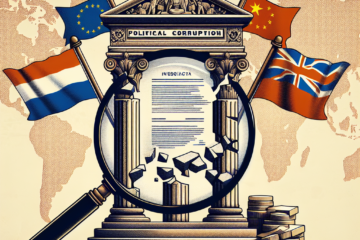
The Intersection of Political Corruption and Global Security

Introduction
In 2025, the world grapples with the increasing complexity of global security threats intertwined with political corruption. Understanding the intersection of political corruption and global security is crucial for policymakers and citizens alike. Political corruption, defined as the abuse of power for personal gain, not only undermines democracy but also exacerbates vulnerabilities that can compromise national and international security. Corruption leads to the misallocation of resources, promotes instability, and fosters an environment where organized crime and terrorism can thrive. Therefore, a thorough examination of these two interconnected issues can shed light on more effective strategies for enhancing global security.
The Impact of Political Corruption on National Security
Political corruption has profound implications for national security that extend beyond domestic borders. When government officials engage in corrupt practices, they often prioritize their personal interests over the needs of the citizens, leading to weakened institutions and governance systems. This neglect of responsibility can cause significant declines in public trust, vastly impairing governmental legitimacy. A lack of confidence in state institutions can foster societal unrest, increasing the likelihood of civil disorder, protests, and even violent conflict.
Furthermore, corrupt governments can create an environment ripe for radicalism and extremism. By enriching themselves at the expense of their citizens, these regimes inadvertently push marginalized groups into the arms of terrorist organizations. For instance, in countries where essential public services are mismanaged or inflow of aid is siphoned off, disenfranchised populations may feel driven to revolt or seek alternative forms of justice through radical means, thus posing a severe threat to both national and global security.
International Corruption and Transnational Security Threats
The ramifications of political corruption extend beyond national borders, contributing to transnational security threats. The intertwining nature of globalized economies means that corrupt practices in one nation can destabilize others, particularly in regions heavily reliant on international aid, trade, or security assistance. For example, corrupt practices in resource-rich countries can lead to the illicit trade of arms and narcotics, which not only fuels conflict locally but also poses direct threats to countries far removed from the epicenter of corruption.
Moreover, the supply chains of illegal activities, facilitated by political corruption, harm global security efforts in multiple dimensions. Organized crime syndicates, often bolstered by corrupt officials, can easily traverse borders, engaging in human trafficking, arms smuggling, and drug transportation. This cross-border crime weakens international law enforcement efforts and complicates collaborative security initiatives. Given the intricate networks of corruption and crime, nations are required to adopt a multi-pronged approach that addresses these transnational threats while fostering enhanced international cooperation.
The Role of Global Governance in Combating Corruption
Global governance plays a pivotal role in addressing the nexus of political corruption and global security. With increasing international awareness, transnational institutions such as the United Nations, World Bank, and International Monetary Fund have begun to prioritize anti-corruption measures as part of their strategic frameworks. These organizations focus on building capacities within nations to improve transparency and accountability, making it harder for corrupt practices to thrive.
Efforts such as the UN Convention Against Corruption (UNCAC) emphasize the importance of international cooperation in fighting corruption. By establishing a collective standard for transparency and ethical governance, UNCAC encourages nations to implement legal frameworks that combat corrupt practices. Additionally, guidelines for transparency in government spending, particularly in sectors vulnerable to corruption—such as defense and procurement—allow for tracking and accountability which can result in improved security outcomes globally.
However, for these measures to be effective, there must be significant political will among member nations to prioritize the anti-corruption agenda alongside national security initiatives. This requires ongoing dialogue, shared intelligence, and, crucially, the involvement of civil society organizations who can hold governments accountable.
Corruption in Conflict Zones: A Global Security Dilemma
Conflict zones often serve as breeding grounds for rampant corruption, leading to myriad challenges for global security. As power vacuums emerge during conflicts, political corruption flourishes, with various factions exploiting the chaos for their gain. In regions like the Middle East and parts of Africa, the illicit exploitation of resources, such as oil and precious minerals, often finances ongoing conflicts and contributes to the persistence of violence. For instance, in 2025, reports indicated that warlords in some regions of Somalia continue to profit from illegal fishing and taxing humanitarian aid ship deliveries amid political turmoil.
Moreover, corruption erodes humanitarian efforts, as relief supplies may be diverted or embezzled by corrupt officials or armed groups. In Syria, ongoing corruption hampers both foreign aid and reconstruction efforts, facilitating an environment where terrorism and militant extremism can thrive. These dynamics exemplify how corruption can derail progress toward peace while routine governance remains undermined.
Rhizomatic corruption in conflict zones complicates the restoration of legitimate governance structures post-conflict. As former combatants may turn to corruption as a means of survival, the cycle of violence can continue in different forms. Thus, addressing corruption in conflict and post-conflict areas is essential for achieving long-term stability and security, emphasizing the urgent need for unified international responses.
The Future of Global Security: Strategies to Mitigate Corruption
Looking toward the future, innovative strategies that integrate technology and community engagement can serve to mitigate corruption while enhancing global security. One promising approach involves utilizing blockchain technology to increase transparency in government transactions. By creating immutable records for budget allocations, procurement processes, and aid distribution, blockchain can boost public confidence in government institutions. Some countries, particularly in Africa and Southeast Asia, are piloting blockchain-based solutions to ensure that development aid is used effectively, thus creating a model that could be expanded globally.
Community engagement also plays a crucial role in combating corruption. Public advocacy and grassroots movements can foster accountability and transparency, making it more difficult for corrupt officials to operate unchecked. Education campaigns focused on civic responsibility encourage citizens to demand more from their governments while fostering a culture of integrity and ethical governance. Local communities becoming involved in monitoring resources, especially in vulnerable areas, can significantly reduce the channels of corruption.
Lastly, fostering global partnerships to share best practices and policies is vital. Collaboration between nations, civil society, and private sectors can help develop integrated approaches to combating corruption. Enhanced training programs for public officials, focused on ethics and integrity, can also instill values that prioritize citizen welfare over personal gain. By building a collective approach to address corruption, the path toward more secure and stable global environments becomes attainable.
Conclusion
In 2025, the relationship between political corruption and global security remains a significant concern that affects nations worldwide. The failure to address corruption not only threatens the stability of individual countries but also undermines international efforts towards collective security. Throughout this article, we explored the multifaceted nature of this issue, emphasizing the urgency of international cooperation, innovative solutions, and grassroots engagement.
As corruption continues to exacerbate vulnerabilities and challenges, the integration of technology and community involvement emerges as critical strategies for enhancing accountability and transparency. The need for strengthened global governance frameworks cannot be overstated; effective strategies that prioritize anti-corruption measures are crucial for establishing lasting global security in an increasingly interconnected world.
FAQs
What is the relationship between political corruption and global security?
Political corruption undermines governance, erodes public trust, and can exacerbate conditions such as civil unrest, which pose significant threats to national and global security.
How does corruption contribute to conflicts?
In conflict zones, corruption can create power vacuums and facilitate the exploitation of resources by warlords and factions, perpetuating violence and instability.
What are some measures being taken globally to combat political corruption?
Global initiatives like the UN Convention Against Corruption promote international cooperation, transparency measures, and capacity-building to combat corruption effectively.
How can technology be utilized against political corruption?
Technologies like blockchain can enhance transparency in government spending and resource allocation, reducing opportunities for corrupt practices.
What role do communities play in fighting corruption?
Community engagement fosters accountability, and public advocacy can compel governments to prioritize transparency and ethical governance practices.