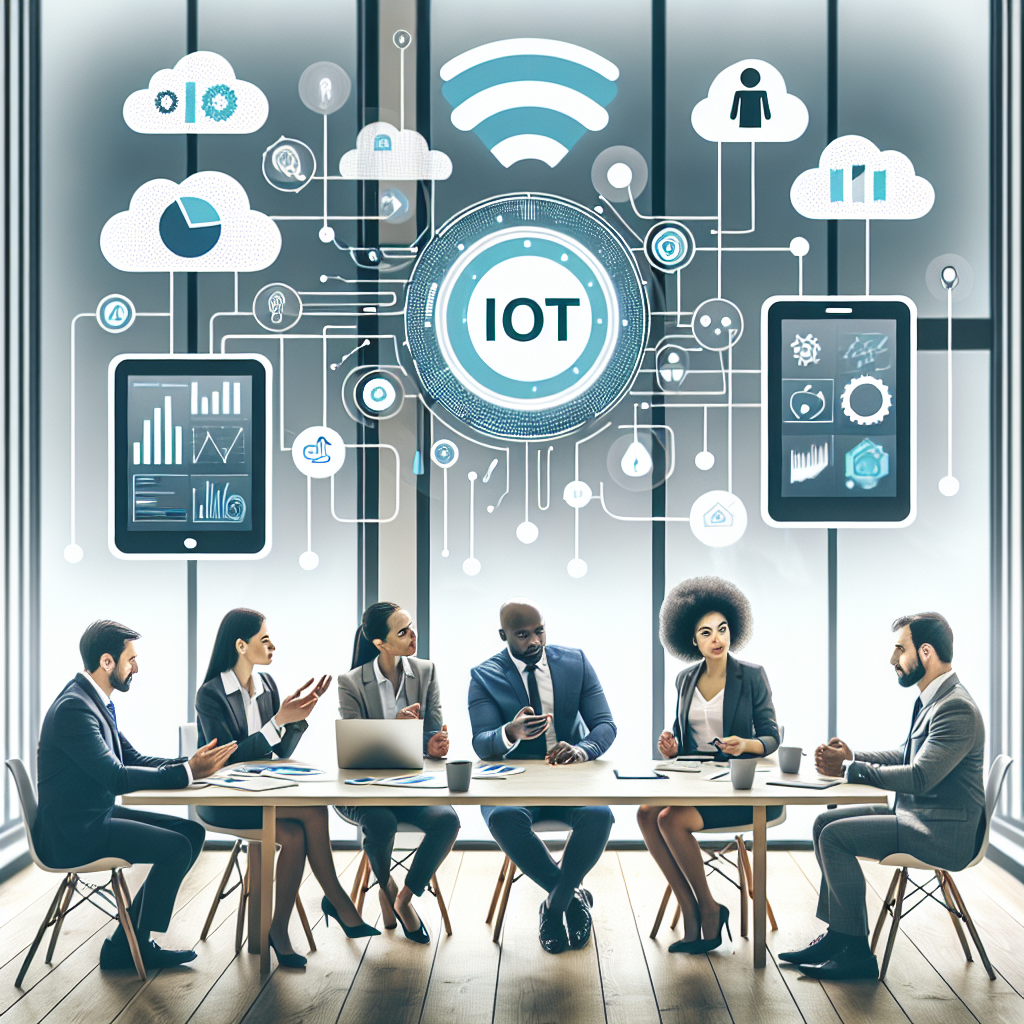
The integration of the Internet of Things (IoT) in team management and training has revolutionized how organizations approach workforce development and operational efficiency. With advancements in IoT technologies, businesses can now collect real-time data, streamline processes, and tailor training programs to the unique needs of their teams. This article delves deep into the transformative power of IoT in team management and training, exploring its benefits, challenges, and the future it heralds for organizations in 2025.
Understanding IoT in Team Management
The Internet of Things (IoT) refers to the interconnectedness of devices and systems that communicate and exchange data over the internet. In the context of team management, IoT plays a critical role in providing managers with the tools they need to monitor productivity, enhance communication, and optimize processes. From wearable devices that track employees’ health and productivity to smart office environments that adjust based on occupancy, IoT solutions are redefining how teams operate.
In 2025, IoT technologies have become more cost-effective and accessible, allowing businesses of all sizes to incorporate these tools into their team management strategies. For instance, organizations can implement smart sensors to analyze workspace utilization, identify bottlenecks in team workflows, and facilitate a more collaborative environment. Real-time feedback mechanisms enabled by IoT can help managers gauge employee satisfaction, pinpoint areas for improvement, and ultimately create a more dynamic work environment.
The Role of IoT in Workforce Training
Training is a crucial aspect of team management, and IoT is transforming how organizations deliver instruction and support to their employees. With IoT-enabled devices, companies can offer personalized training experiences that cater to individual learning styles and paces. For example, wearable technology can provide trainers with insights into an employee’s engagement and performance during training sessions, allowing for immediate adjustments to the program.
Moreover, IoT solutions facilitate remote training and onboarding processes, making it easier for global organizations to maintain consistent training standards. With the rise of virtual reality (VR) and augmented reality (AR) tools integrated with IoT, employees can participate in immersive training experiences that replicate real-world scenarios. This kind of hands-on learning is particularly beneficial in high-stakes environments where practical experience is vital for skill development.
The Benefits of IoT in Team Management and Training
The integration of IoT technologies in team management and training offers numerous advantages, starting with enhanced data collection. By monitoring various metrics such as employee engagement, productivity levels, and training effectiveness, organizations can make data-driven decisions that lead to improved performance. These insights enable managers to identify high-performing team members as well as those who may require additional support, fostering a culture of continuous improvement.
Another significant benefit is improved engagement and collaboration among team members. IoT tools can facilitate seamless communication and information sharing, breaking down silos that often exist within organizations. Through cloud-based platforms and interconnected devices, employees can access resources, collaborate on projects, and participate in training sessions from virtually anywhere. This flexibility not only supports remote work but also encourages cross-departmental collaboration, ultimately leading to innovation and enhanced problem-solving.
Furthermore, IoT-driven training solutions can provide organizations with measurable outcomes, helping to justify ongoing investments in employee development. Companies can track the effectiveness of training programs through analytics and employee feedback, ensuring that resources are allocated effectively. Such accountability is vital in today’s competitive landscape, where businesses must demonstrate ROI on their training initiatives.
Challenges in Implementing IoT Solutions
While the benefits of integrating IoT in team management and training are substantial, several challenges can arise during implementation. One major concern is data security. With an increasing number of devices connected to the internet, organizations must invest in robust security measures to protect sensitive information. This includes understanding potential vulnerabilities associated with IoT devices and ensuring staff is trained on best practices for data protection.
Additionally, the integration of IoT technologies can require significant investment and may entail a learning curve for employees. Organizations must not only consider the financial aspect of deploying IoT solutions but also the time needed for staff to adapt to new systems. Change management strategies, including comprehensive training and support, are necessary to minimize resistance and ensure successful adoption.
Interoperability is another challenge that businesses face when integrating IoT devices into their existing systems. Many organizations utilize a combination of legacy and modern technologies, and ensuring these different systems can communicate effectively may require substantial technical resources. Organizations should consider adopting open standards and investing in scalable solutions that can evolve with their needs, minimizing potential integration issues.
Future Trends of IoT in Team Management and Training
As we look ahead, several trends are shaping the future of IoT integration in team management and training. Firstly, there’s a growing emphasis on artificial intelligence (AI) and machine learning paired with IoT technologies. These advancements enable organizations to utilize predictive analytics to anticipate training needs and identify emerging skills gaps within their teams. This proactive approach allows companies to stay ahead of industry changes and ensure their workforce remains competitive.
Secondly, as remote work becomes a norm, the demand for virtual collaboration tools integrated with IoT devices will continue to rise. Innovative solutions that enhance virtual team dynamics and provide immersive experiences will help organizations maintain the engagement and productivity of distributed teams. This shift will also require that companies invest in cloud-based platforms that support real-time collaboration and data sharing, thereby sustaining team cohesion even when employees are geographically dispersed.
Lastly, the trend towards sustainability will influence IoT adoption in team management and training. Organizations are increasingly recognizing the importance of ethical practices and social responsibility, and IoT can help in this domain. By leveraging smart building technologies to optimize energy use or employing virtual training methods to reduce travel emissions, organizations can enhance their sustainability efforts while improving team engagement and performance.
Conclusion
The integration of IoT in team management and training is reshaping the workforce landscape, offering immense benefits in terms of data-driven decision-making, enhanced collaboration, and personalized training experiences. While challenges such as data security, financial investment, and interoperability must be addressed, the potential for enhanced employee engagement and organizational efficiency is undeniable. As we move further into 2025, embracing IoT technologies will not be just an option but a necessity for businesses looking to thrive in a competitive environment. By leveraging IoT, organizations can build a future-ready workforce equipped to meet evolving demands and challenges.
FAQs
What is IoT in team management?
IoT in team management refers to the use of interconnected devices and systems to enhance communication, monitor productivity, and optimize team workflows. It provides managers with valuable insights that can inform data-driven decisions.
How can IoT improve training for employees?
IoT enhances employee training by providing personalized experiences, allowing real-time feedback during training sessions, and enabling remote and immersive training methods, such as virtual or augmented reality applications.
What challenges are associated with integrating IoT in organizations?
Challenges include concerns about data security, the initial financial investment required, the learning curve for employees, and potential interoperability issues with existing systems.
What are future trends of IoT in team management?
Future trends include the integration of AI and machine learning for predictive analytics, the increasing demand for virtual collaboration tools, and a growing emphasis on sustainability initiatives supported by IoT technologies.
How can organizations measure the effectiveness of IoT training programs?
Organizations can measure effectiveness through analytics that track employee performance, engagement levels, and feedback surveys following training sessions to assess knowledge retention and skill application.