Challenges Facing Political Debates in a Polarized Society

Introduction
Political debates serve as a cornerstone of democratic societies, facilitating the exchange of ideas and shaping public opinion. However, in 2025, the challenges facing political debates in a polarized society are becoming increasingly intricate and pronounced. As partisan divides deepen, these debates are often characterized by hostility rather than constructive dialogue. This article explores the significant obstacles that impede productive discussions and examines how these challenges are evolving in a world where misinformation and social media dominate political discourse.
The Rise of Polarization in Political Debate
In recent years, polarization has transcended mere disagreement over policies to create an environment where differing opinions are often viewed not just as alternative viewpoints but as threats. This shift in perception hampers the possibility of finding common ground during political debates. Polarization is fueled by various factors, including the mainstreaming of social media, which enables echo chambers. These digital platforms allow individuals to curate their news consumption, reinforcing their existing beliefs and isolating dissenting opinions. This self-reinforcing behavior has reduced the inclination to engage in debates with opposing viewpoints, making it increasingly challenging to facilitate effective discussions in political forums.
Moreover, the emotional charge of political issues has escalated in recent years. Debates that were once grounded in policy achievements and critiques have morphed into personal attacks and character assassinations. As political identities become intertwined with personal ones, opponents are often regarded as adversaries rather than fellow citizens with differing opinions. This environment stifles open dialogue, as individuals tend to retreat into their ideological corners, further deepening the divide. Therefore, fostering a culture of respectful discourse is paramount to overcoming the challenges facing political debates today.
Media Influence and Misinformation
The role of media in shaping public perception cannot be overstated, particularly in an age fraught with misinformation and sensationalism. In 2025, the landscape of news media is dominated by a fragmented array of outlets that contribute to the challenges facing political debates. Traditional journalists are often overshadowed by social media influencers and partisan news channels, leading to a competition that prioritizes attention over factual reporting. As a result, misinformation spreads rapidly, complicating efforts to have informed debates grounded in reality.
Moreover, automated algorithms drive content distribution on platforms like Facebook and Twitter, often prioritizing sensational stories that amplify emotions, whether positive or negative. Consequently, misinformation often dominates discussions surrounding significant political events, resulting in heated debates that are less about substance and more about emotion. Participants may cite inaccurate information, further aggravating tensions rather than fostering understanding. To combat misinformation, establishing stringent standards for journalistic integrity and promoting media literacy among the public are critical steps in reversing this trend.
The Role of Social Media in Political Discourse
Social media is a double-edged sword in the realm of political debate. On one side, it democratizes political discourse, allowing voices that were previously marginalized to find a platform. Grassroots movements, advocacy campaigns, and political initiatives can gain traction faster than ever. However, this democratization brings its own set of challenges, primarily when the platforms are exploited for polarizing purposes. In 2025, social media algorithms often reward sensational and divisive content, leading to an environment where constructive discussions are drowned out by inflammatory rhetoric. This has resulted in a generation of political participants more accustomed to outrage than dialogue.
The increasing tendency for individuals to retreat into their ideological bubbles exacerbates existing divides. Echo chambers formed on platforms like Reddit and Twitter isolate users from alternative viewpoints, narrowing perspectives. As users engage primarily with like-minded individuals, the experience of political debate shifts from a multifaceted discussion to a tribal conflict where the aim is not to engage, but to defeat the opposition rhetorically. This trend makes it difficult for traditional debating formats to function effectively, as participants often lack the foundational understanding required for persuasive discussion.
Furthermore, the anonymity provided by social media encourages aggressive tactics that would be less likely in face-to-face interactions. Participants can easily attack opponents without the social constraints of in-person discourse, resulting in an environment more conducive to hostility than open dialogue. As society grapples with how to address these challenges, innovative approaches to online engagement and discourse moderation must be prioritized to improve the quality of political debates.
Strategies to Enhance Political Debates
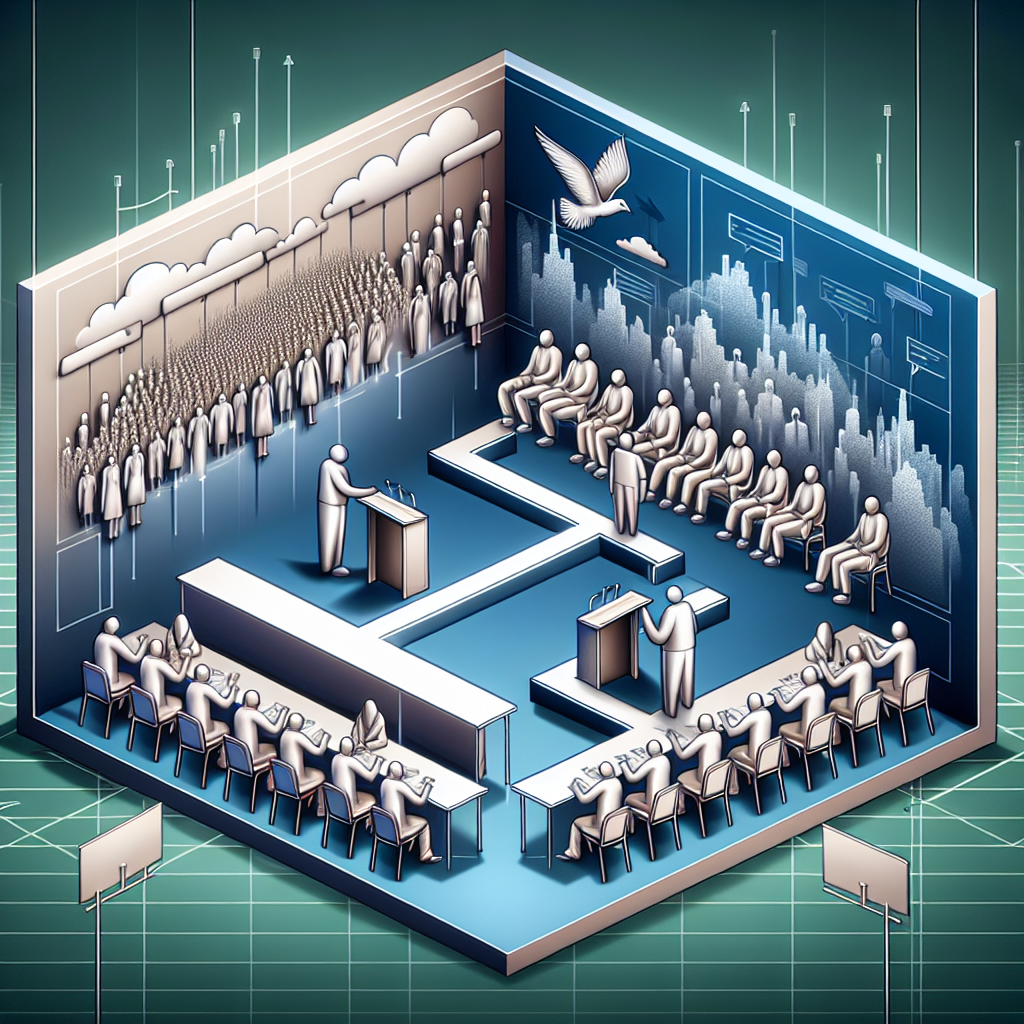
To address the challenges of political debates in a polarized society, adopting innovative strategies is essential. One approach is to implement debate formats designed to encourage civil discourse. For instance, moderated town hall meetings and structured debates that require participants to present opposing viewpoints before offering their own can create a more balanced discourse. Such frameworks help alleviate the aggression often associated with political conversations, fostering an environment where ideas can be thoughtfully exchanged rather than merely attacked.
Additionally, investing in educational initiatives aimed at improving critical thinking and media literacy is vital. Schools and community organizations can provide workshops on assessing the credibility of sources and understanding the importance of engaging with differing opinions. By preparing people to navigate the complex media landscape and encouraging them to question their beliefs, society can cultivate a generation less inclined to reduce political arguments to conflict and ideology.
Finally, engaging platforms that bridge ideological divides can also play a crucial role in improving political debates. Initiatives like bipartisan forums or community-led discussions can elevate the discourse by emphasizing shared values and mutual understanding. By fostering environments that prioritize collaboration over competition, society can work towards healing the divisions that have made political debates so contentious.
The Importance of Empathy and Active Listening in Political Dialogue
As political polarization continues to pose challenges, the importance of empathy in debates cannot be understated. Empathy involves actively listening to others and attempting to understand their perspectives rather than simply waiting for a turn to respond. By fostering a culture that values empathy, participants in political debates can engage constructively, even when they fundamentally disagree. In 2025, emphasizing emotional intelligence and understanding in political discussions is vital for achieving productive outcomes.
Active listening is a critical component of empathetic engagement. This practice goes beyond merely hearing the words spoken; it involves grasping the underlying feelings and motivations behind those words. When debaters practice active listening, they are more likely to find common ground, even within polarizing topics. As a result, emphasizing empathy and understanding may bridge divides and potentially transform contentious debates into respectful discussions centered on shared values and goals.
Moreover, the promotion of empathy in political communication could lead to a more engaged electorate. Citizens who feel heard are likelier to participate in the democratic process, whether through voting, activism, or discourse. The benefits of empathetic communication extend beyond individual discussions; they can also create ripple effects, fostering a more politically engaged and compassionate society that recognizes the importance of diverse perspectives.
Conclusion
The challenges facing political debates in a polarized society are complex and multifaceted, particularly in the context of 2025’s rapid technological advancements and changing political landscapes. From the rise of misinformation and social media’s dual impact to the critical need for empathy and understanding, these obstacles require innovative approaches and active engagement.
To cultivate a healthier political discourse, fostering environments that prioritize respectful discussion, improving media literacy, and emphasizing the importance of empathy are vital. By implementing strategies that focus on collaboration rather than conflict, society can work towards transformative political debates that inspire unity and understanding in an increasingly divided world.
FAQs
What are the primary challenges facing political debates today?
The primary challenges include polarization in society, misinformation spread through social media, and a lack of empathetic engagement during discussions.
How does social media contribute to political polarization?
Social media promotes echo chambers, where individuals engage only with like-minded people, reinforcing their beliefs and making it difficult to engage with opposing viewpoints.
What strategies can improve political debates?
Strategies to enhance political debates include implementing structured debate formats, promoting media literacy, and fostering empathetic communication among participants.
Why is empathy important in political discussions?
Empathy encourages active listening and understanding, allowing for more constructive and respectful conversations that promote collaboration over conflict.
How can the public combat misinformation in political discourse?
Combat misinformation by engaging in media literacy education, verifying sources before sharing information, and critically assessing news content to ensure accuracy.