How MLB Teams Approach Free Agency and Trades

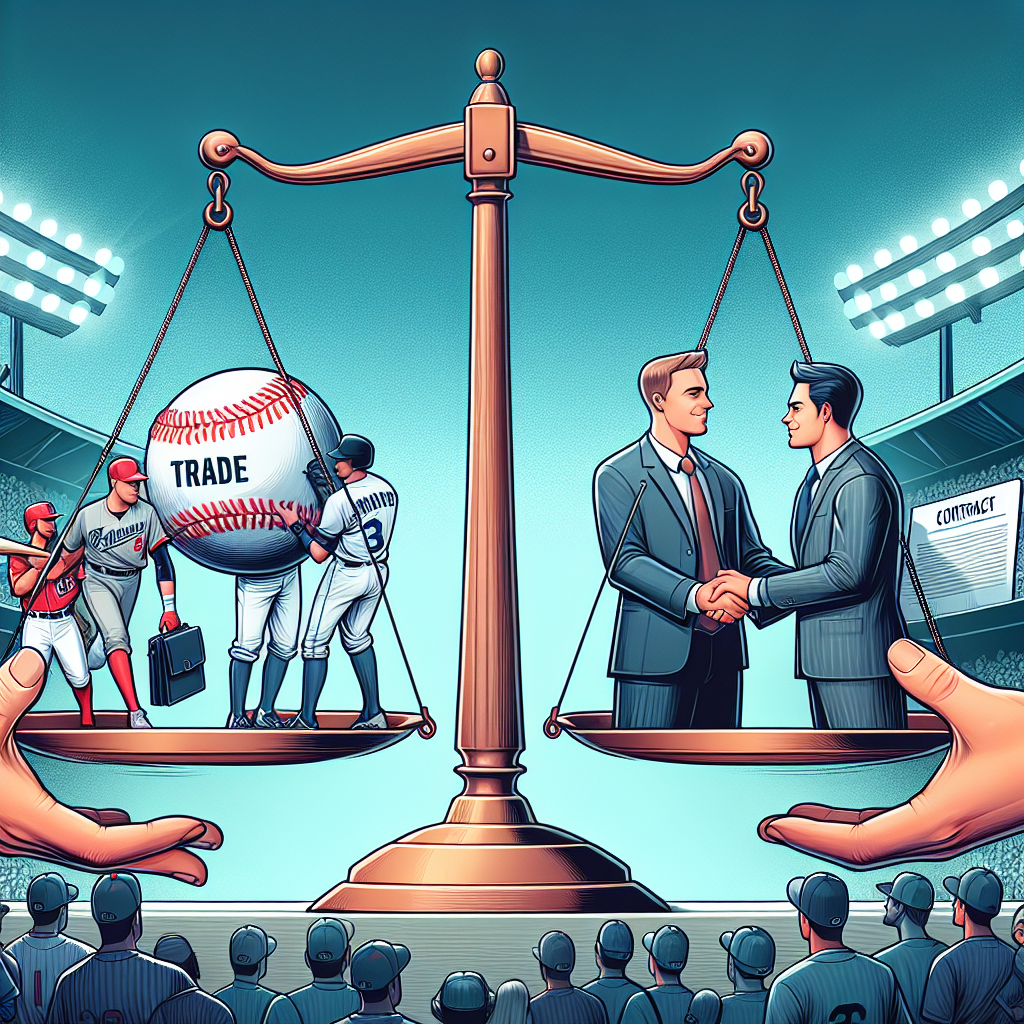
Understanding How MLB Teams Approach Free Agency and Trades
In the dynamic world of Major League Baseball (MLB), teams constantly seek ways to enhance their rosters through strategic decisions in free agency and trades. As of 2025, the landscape is as competitive as ever, with franchise strategies required not only to respond to immediate needs but also to build for the future. Understanding how MLB teams approach free agency and trades deeply impacts their performance, fan engagement, and financial health. This article delves into the intricacies of these processes, posturing teams for success both on and off the field.
Free Agency: The Lifeline for MLB Teams
Free agency represents a critical avenue through which MLB teams can acquire talent without surrendering players. With the implementation of the Collective Bargaining Agreement in December 2021, teams now have a clearer framework for negotiating contracts that impact their finances and player rosters. In 2025, free agency has evolved to accommodate younger players entering the market sooner, giving teams better access to emerging talent.
When approaching free agency, teams conduct comprehensive evaluations of their current rosters, focusing on areas of strength and weakness. By analyzing player performance metrics, injury histories, and potential contract values, teams can accurately identify players who not only fit their needs but also integrate well within the existing clubhouse culture. Front offices utilize advanced statistics and scouting reports to gauge a player’s future potential and ensure the best possible investment.
Moreover, to maximize their effectiveness during free agency, teams have begun to prioritize analytics alongside traditional scouting methods. The advent of technology has allowed organizations to analyze not just on-field performance but also intangible factors such as leadership skills, work ethic, and adaptability. This holistic approach to player evaluation fundamentally shapes negotiations, allowing teams to identify under-the-radar talents who may offer high returns on investment.
Trades: A Key Component in Building a Competitive Roster
While free agency provides an off-the-shelf solution for bolstering a roster, trades often serve as a more strategic and creative approach for teams looking to balance long-term aspirations with immediate needs. In 2025, the MLB trade landscape has shifted significantly, influenced by the increasing trend towards analytics-driven decision-making. Teams are now more eager to explore trades, particularly as they seek cost-effective means to improve their lineups while preserving their top prospects.
When teams engage in trade discussions, they consider multiple factors, including player performance, contractual obligations, and organizational depth. Strategic evaluation of minor league systems plays a pivotal role in determining which prospects can be moved without sacrificing future competitiveness. Teams must also be cautious, as miscalculations in trade value assessments can lead to long-term regrets, especially in the Age of Analytics, where even mid-level prospects can flourish and turn into impactful major leaguers.
Moreover, teams often leverage trade talks during the off-season or around the trade deadline, when market dynamics are most favorable. An active approach to trading can also send signals to the fanbase regarding the team’s commitment to winning—the more proactive they are in making moves, the more they tend to invigorate interest and engagement from fans. Balancing these factors requires finely-tuned instincts and collaboration among scouting departments, general managers, and ownership.
The Role of Analytics in Free Agency and Trades
As we delve deeper into 2025, one of the most revolutionary changes in MLB operations is the widespread adoption of analytics across both free agency and trades. Teams are investing in sophisticated data-collection techniques that allow them to go beyond traditional statistics. Advanced metrics, including exit velocity, launch angle, and defensive metrics, shape critical decision-making processes on both fronts.
For teams in search of free agents, analytics help streamline the selection process by highlighting players who may have been overlooked due to subpar past seasons but possess the underlying skills that forecast future success. By utilizing predictive models, franchises can estimate a player’s potential performance based on a multitude of variables, thereby making informed decisions that can yield substantial returns on investments.
In terms of trades, analytics play a pivotal role in assessment and negotiation. Organizations now crunch numbers to predict the impact of players moving from one context to another, allowing them to identify which players may thrive when integrated into their unique team culture. Additionally, teams employ advanced simulation models to evaluate trade proposals, ensuring they understand the potential outcomes of different scenarios before finalizing agreements. The ability to dissect potential trades with these analytical tools significantly reduces risk and informs strategy.
Financial Considerations in Free Agency and Trades
In 2025, financial considerations remain a primary concern for MLB teams as they approach free agency and trades. The revenue-sharing model and differing market sizes greatly affect how franchises structure their budgets, leading to a diverse array of strategies. Teams in larger markets may afford luxury spending in free agency, whereas smaller markets often need to be strategic in their acquisitions.
Understanding the financial implications of player contracts is paramount. Teams must navigate not just the short-term salary impact but also the long-term ramifications on payroll flexibility, luxury tax thresholds, and overall financial health. Moreover, increased focus on player development has invited many teams to invest heavily in their minor league systems, which may restrict them from overspending in free agency.
As a result, teams are increasingly assessing player spending in relation to potential revenue, particularly in ticket sales and merchandising. The success of high-profile free agent signings can lead to increased attendance, creating a feedback loop that influences future budgetary flexibility. In this environment, balancing immediate baseball operations with long-term financial strategies becomes crucial for sustained competitiveness.
Impact of Market Trends on Free Agency and Trades
In 2025, market trends influence how MLB teams approach both free agency and trades. With the advent of a younger and more data-driven player pool, organizations are increasingly wary of lapsing into habitual spending on veteran free agents. Trends indicate a growing preference for signing emerging players with untapped potential over established stars, who often command hefty contracts.
This shift is further characterized by an increasing tendency for players to prioritize long-term security over immediate high-payoff opportunities, leading to potential changes in negotiation tactics. As free agency matures, teams recognize they must adapt to market conditions—those unwilling to pivot risk falling behind. This necessitates consistent monitoring of player values, understanding comparative market valuations, and communicating effectively with agents to identify the best opportunities available.
Additionally, the trade market has begun to reflect these trends, with teams increasingly willing to part with established players in exchange for younger talent and prospects—an approach that emphasizes rebuilding for the future instead of chasing present glory. Executives are becoming adept at recognizing which players have trade value and which simply do not merit the premium that others may imply, maximizing returns while minimizing losses.
Conclusion
In conclusion, the approach MLB teams take to free agency and trades reflects the heart of their operational strategy. As of 2025, the integration of analytics, financial considerations, and market trends has led to a paradigmatic shift in how franchises build their rosters. By emphasizing forward-thinking approaches and becoming adaptable to constantly changing dynamics, organizations are better positioned to optimize performance, fan engagement, and resource management. The landscape is ever-evolving, but the fundamental principles guiding these processes remain key components of success in Major League Baseball.
FAQs
What factors do MLB teams consider during free agency?
MLB teams consider a player’s past performance, injury history, versatility, market demand, and potential fit within the team’s culture and organization.
How do teams determine trade value for players?
Teams evaluate trade value by analyzing performance metrics, potential for development, current contracts, team needs, and assessments made through advanced analytics and scouting reports.
What impact does analytics have on player acquisition?
Analytics provides teams with comprehensive insights into player performance beyond traditional statistics, allowing for more informed decisions in both free agency and trades.
How has the landscape of free agency changed in recent years?
The landscape has shifted towards younger players entering free agency sooner, with teams increasingly focusing on sustainable, long-term potential rather than just immediate star power.
What role does financial planning play in roster construction?
Financial planning impacts budgets, luxury tax considerations, and future payroll flexibility, influencing how teams approach free agency and trades while aiming for competitiveness.