The Role of Politics in Olympic History
Introduction
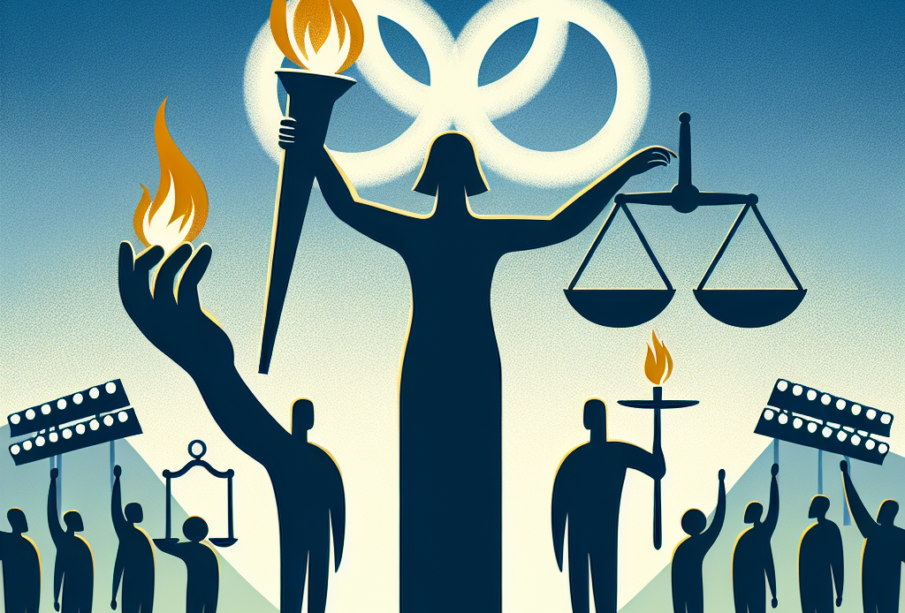
The Olympic Games are celebrated as a pinnacle of athletic achievement, uniting nations in a spirit of competition and camaraderie. However, the role of politics in Olympic history has often overshadowed the purity of sport. From boycotts to grand political statements, the interplay between politics and the Olympic Movement has shaped the games in profound ways. This article delves into major political incidents in Olympic history, illustrating how political agendas have influenced the games, from the Cold War era to the 21st century.
The Political Landscape of the Olympics
The Olympics have always been more than mere sports events. They have served as a global stage for nations to showcase their strength, culture, and ideology. The history of the modern Olympic Games, which began in 1896, is replete with examples of how global political trends have influenced the event. For instance, the 1936 Berlin Games became a propaganda tool for Adolf Hitler’s Nazi regime, illustrating how the games can be manipulated by political entities to present an ideologically charged image to the world. These Games starkly highlighted the darker side of nationalism and the potential for sport to be intertwined with oppressive political messages.
Fast forward to the Cold War era, where the Olympics were often embroiled in the geopolitical tension between the United States and the Soviet Union. The 1980 Moscow Games, for instance, became a battleground of ideology as the U.S. and several other nations staged a boycott in response to the Soviet invasion of Afghanistan. This event marked a significant moment in Olympic history, underscoring how international relations can dictate acceptance and participation in the games, leading to an era defined not just by competition, but by political gamesmanship.
Boycotts: A Tool of Political Protest
Boycotts have become one of the most visible representations of political sentiments affecting the Olympics. The 1980 and 1984 Games serve as quintessential examples of this tactic. The U.S. led a boycott of the Moscow Games in 1980, which, aside from protesting Soviet actions, was also a testament to how national pride and political ideologies could shape international sports policies. Over 60 nations abstained from competing, a move that would echo in history as an unprecedented international protest.
Conversely, the 1984 Los Angeles Olympics witnessed a retaliatory boycott, as the Soviet Union and several Eastern Bloc countries withdrew in response to the prior year’s actions. These boycotts, while showcasing national solidarity, also detracted from the spirit of the Olympics, demonstrating how political motivations can disrupt the athletic competition meant to unify participants and spectators. The impact of such decisions extended beyond the athletes to economic consequences, shaping the commercial aspects linked to the games as well.
Protests on the Olympic Stage
Political protests during Olympic events have also been prominent, providing a platform for athletes to speak out against injustice. One of the most notable incidents occurred during the 1968 Mexico City Olympics, where American sprinters Tommie Smith and John Carlos raised their fists in a Black Power salute during the medal ceremony. Their actions were not just about personal expression but aimed at highlighting racial inequality in the United States and beyond. This moment resonated deeply across the globe, symbolizing how athletes can harness their visibility to draw attention to pressing social issues.
The 2021 Tokyo Olympics, held amidst a global pandemic, similarly witnessed protests against systemic injustices. Japanese athletes took to social media and the Olympic Village to voice their concerns regarding various social issues, from gender inequality to climate change. The International Olympic Committee’s Rule 50 permits athletes to express their views, acknowledging that the Olympic platform is one where political discussions can foster essential dialogues. This evolution reflects a shift towards integrating sporting excellence with social responsibility, allowing athletes to use their fame for advocacy.
The role of politics in Olympic history isn’t limited to boycotts and protests alone; it also intersects with issues like representation and gender equality. Countries’ participation and policy changes throughout Olympic history often reflect broader societal movements. For example, initiatives aimed at increasing women’s participation in sports gained momentum during the 2016 Rio Olympics, where the number of female athletes competing reached unprecedented levels.
Nationalism and the Olympics
Nationalism has frequently taken center stage at the Olympics. The spectacle of athletes competing under their nation’s flag evokes a sense of pride and unity. However, this form of representation can also be exploited for political gain. The 2008 Beijing Olympics is a prime example, where the Chinese government sought to present an image of a modern and powerful nation. Despite the backdrop of human rights violations and geopolitical tensions, the spectacle of the games was used to showcase China’s rise on the global stage. The opening ceremony, directed by Zhang Yimou, displayed a meticulously crafted narrative aiming to project cultural prowess and national unity.
The Olympics can also exacerbate nationalistic tensions, as seen during the divided period in the Korean Peninsula. The participation of athletes from North and South Korea in various Olympic events has been a symbolic representation of their complicated relationship. For instance, the joint march at the 2018 Pyeongchang Games and the joint women’s ice hockey team reflected diplomatic gestures that were heavily scrutinized and debated both domestically and internationally. This blending of sports and diplomacy illustrates the complexities of national identities within the Olympic framework and how they resonate globally.
Moreover, amid increasing nationalism in various countries, the Olympics can act as a counter-narrative. As nations vie for medals and accolades, a sense of global community can emerge, highlighting shared humanity over divisive politics. Athletes, through competition, often become ambassadors of goodwill, reminding us that while politics can shape the narrative, the shared passion for sport possesses the power to transcend borders and ideologies.
The Future of Politics in Olympic History
As we look to the future of the Olympics, specifically the 2024 Paris Games and beyond, the role of politics will undoubtedly remain significant. Issues such as climate change, human rights, and globalization are likely to be prominent in shaping the Olympic discourse. Activism by athletes is expected to continue, potentially even more prominently, with the younger generation increasingly aware of global issues. The trend towards ambassadorial roles for athletes, as seen with movements advocating for mental health awareness, is an encouraging shift that will likely persist.
The advancement of technology will also influence the intersection of politics and the Olympics. Social media platforms provide athletes with unprecedented opportunities to voice their opinions and mobilize support for their causes in real-time. This democratization of communication allows for grassroots movements to develop rapidly, providing a counterbalance to institutional narratives. The Tokyo 2021 Games demonstrated how athletes and supporters could leverage these platforms for visibility, potentially signaling a future where the Olympic platform serves not merely as a stage for competition, but as a powerful outlet for social change.
Additionally, as the world grapples with issues of inclusivity and diversity, the Olympics will be pressured to adapt to meet these evolving norms. The 2023 decision to allow the mixed-gender events to surpass traditional gender categories represents a significant step toward inclusivity, but further changes will be required. The ongoing dialogue regarding representation will shape national policies linked to Olympic participation and competition, emphasizing the need for continuous adaptation to the cultural and political landscape.
Conclusion
The relationship between politics and Olympic history is complex and multifaceted. The Games have served as a platform for showcasing national pride, a battleground for political protests, and a reflection of global relations that continue to evolve. As we look ahead to future Games, the political context will undoubtedly shape the landscape of international sports competitions. Understanding the dynamics at play between the Olympics and political forces provides crucial insights into not only sports but also the broader societal issues that athletes and nations are grappling with today and in the future.
FAQs
How have past boycotts impacted the Olympics?
Past boycotts have significantly altered the competitive landscape, reducing the number of participating countries and impacting athletes’ aspirations. The 1980 and 1984 Olympics remain prime examples of how political tensions can overshadow athletic achievements.
What role do athletes play in political activism during the Olympics?
Athletes increasingly use their platforms to advocate for social change, with notable protests during medal ceremonies showcasing their commitment to issues such as racial equality, gender rights, and climate change.
How does nationalism shape the Olympics?
Nationalism colors every Olympic event, influencing how nations are represented and how athletes are celebrated. While nationalism can unify, it can also exacerbate conflicts, reflecting broader political tensions in some cases.
What is the future of the Olympics in relation to global politics?
The future of the Olympics will likely be shaped by ongoing dialogues around inclusivity, environmental concerns, and the increased visibility provided by social media, allowing athletes to address pressing societal issues in real-time.