
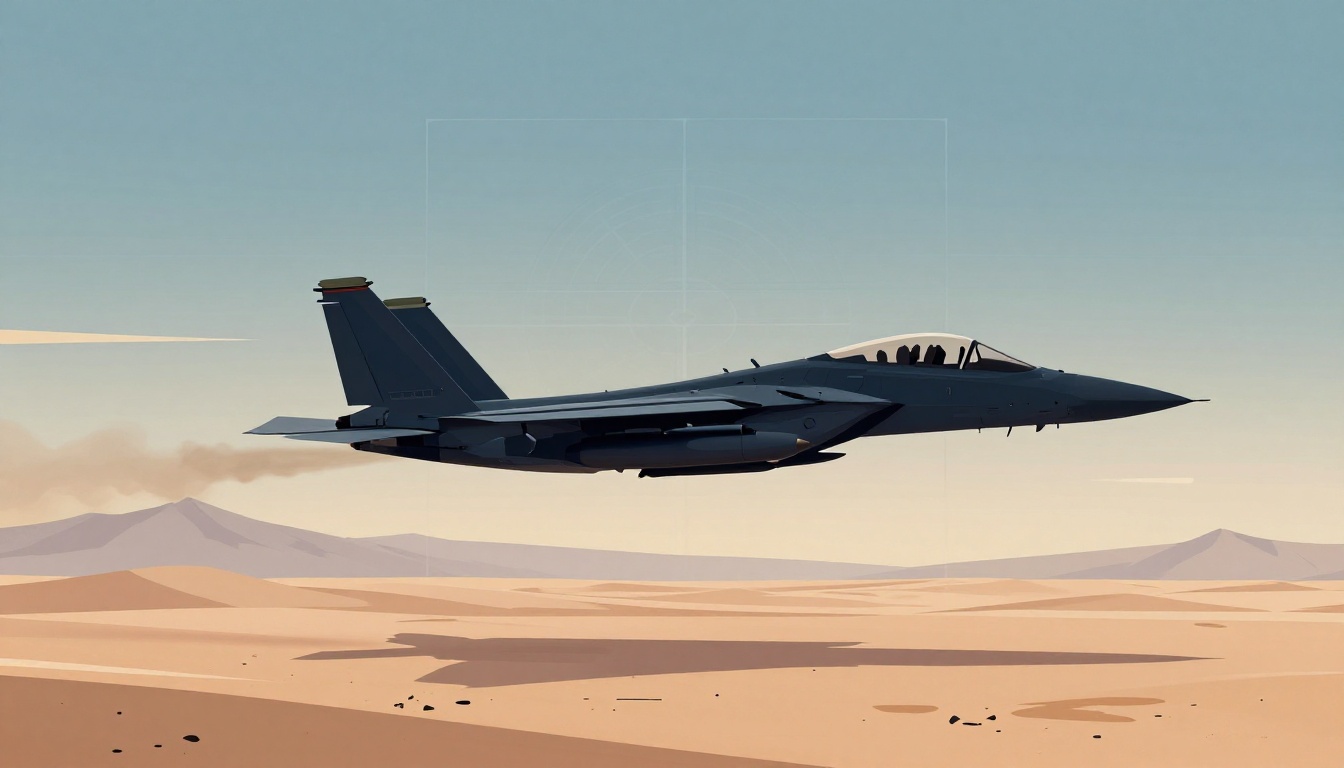
One message said Iran had been badly broken. Then the battlefield answered with a downed American jet.
That contrast sits at the center of the April 3, 2026 incident, when a US F-15E Strike Eagle was reported shot down over Iran during the current phase of the war. For anyone tracking the conflict, US policy, or presidential claims made in real time, the event mattered at once because it challenged the idea that the fighting had already become one-sided.
What happened when the American F-15E went down over Iran
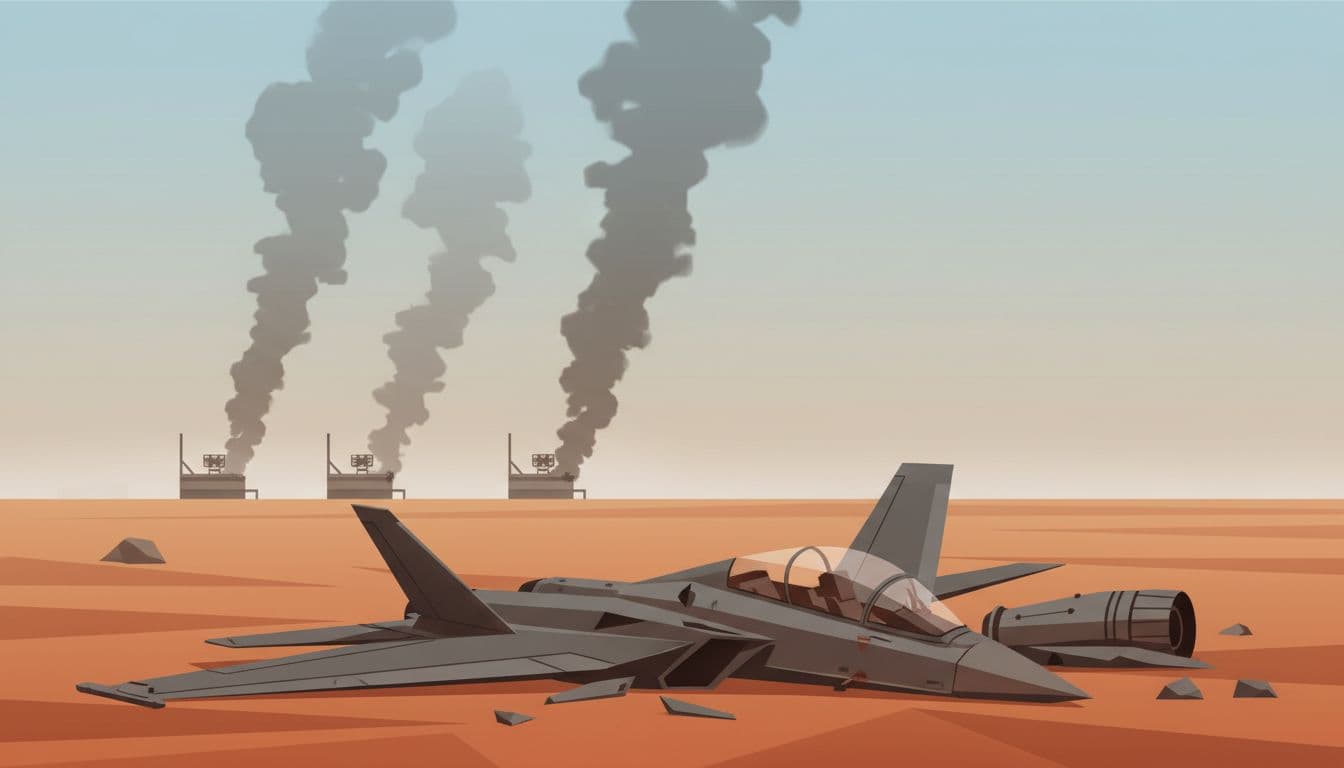
US officials confirmed that an American fighter was brought down by enemy fire over Iran on April 3. Early Iranian reports first said the aircraft was an F-35, but wreckage images and later analyst review pointed instead to an F-15E Strike Eagle.
That distinction matters. An F-15E is a two-seat strike fighter built for deep attack missions, often in dangerous airspace. If one of those aircraft can still be hit after days of heavy US and Israeli operations, then Iran’s military threat had not disappeared.
### The basic timeline, from the crash to the rescue effort
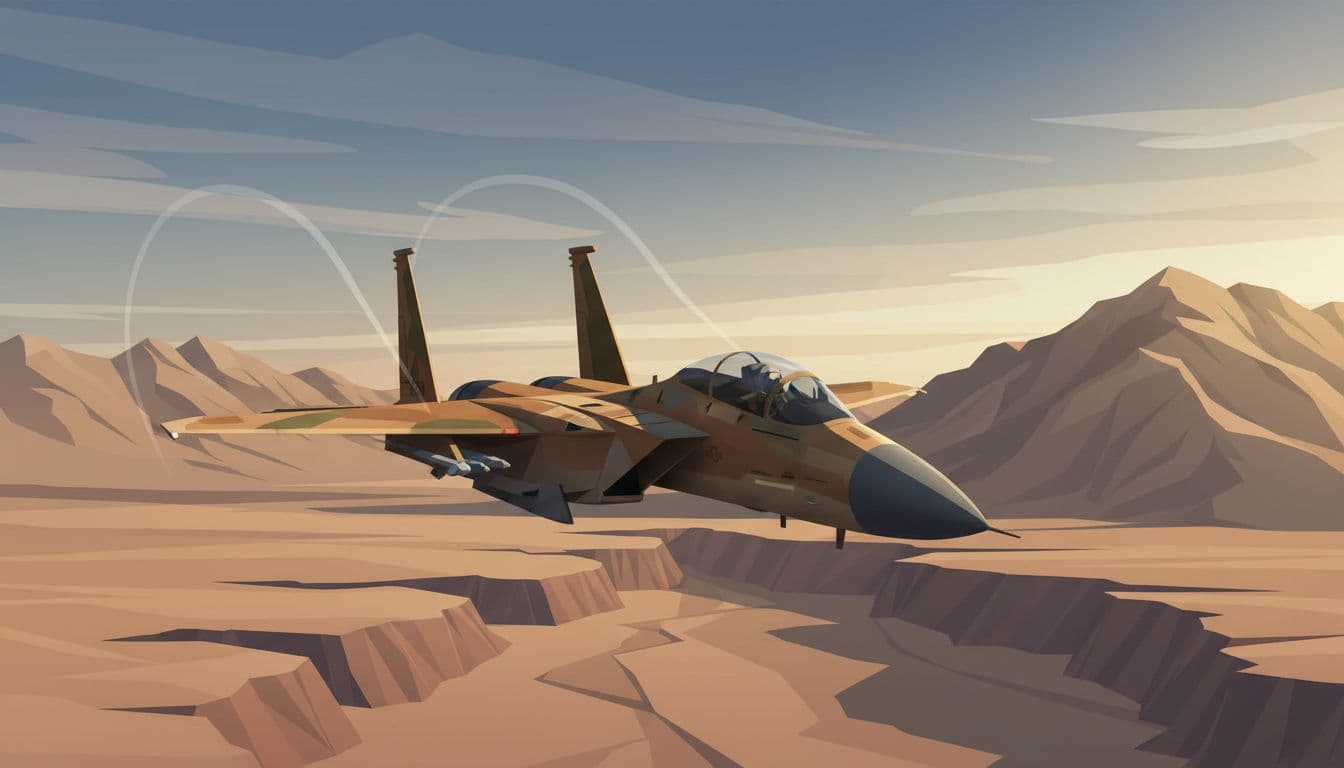
Reports placed the shootdown in the morning, over central or southwestern Iran, during Operation Epic Fury. The F-15E carried two crew members, a pilot and a weapons officer. By later that day, US and Israeli reporting said one crew member had been recovered.
The second crew member remained missing in early reporting on April 4. That gap quickly turned the story from a simple loss report into a live search-and-rescue operation.
US forces then launched combat rescue efforts using aircraft associated with that mission set, including HC-130 support planes and HH-60G Pave Hawk helicopters. Videos and local reports suggested American aircraft were operating low over or near Iranian territory while the search continued. In wartime, that kind of rescue effort is among the riskiest missions any air force undertakes.
What Iran claimed, and what the United States confirmed
Wartime claims came fast, and they did not line up. Iran said more than the United States was willing to confirm.
Here is the clearest way to separate the record:
| Issue | Iranian claims | US confirmed |
|---|---|---|
| Aircraft type | An F-35 was downed | An F-15E was hit by enemy fire |
| Crew outcome | Pilots were captured or rescue failed | One crew member was rescued, one remained missing |
| Rescue effort | A US rescue attempt was hit or disrupted | Rescue operations were underway, with no public US confirmation of Iranian claims |
The key point is simple. The shootdown itself was confirmed. Several dramatic Iranian details were not. That distinction matters because war often produces two battles at once, one in the sky and one in the information space.
Why the shootdown undercut the idea that Iran had been fully crushed
Before the crash, President Trump had used language meant to project control and success. Public descriptions often reduced that message to the idea that Iran had been “decimated.” His documented remarks leaned more on words like “obliterating” and on claims that the United States was close to meeting its goals.
Either way, the message was clear. Iran had taken severe damage, and Washington wanted the public to see momentum on the US side.
### What Trump meant by “decimated,” and why that word matters
Political language in war is rarely accidental. Leaders use strong verbs because they want to calm allies, shape headlines, and pressure the other side. A word like “decimated” does more than describe damage. It suggests collapse. It tells the public that the enemy can no longer fight in a serious way.
That is why the F-15E loss landed so hard. The shootdown did not erase the damage done to Iran’s command sites, radar positions, missile facilities, and senior leadership. Yet it raised a sharper point. If Iran had truly been reduced to a shell, how did it still manage to threaten and hit a sophisticated US strike aircraft over its own territory?
Battlefield damage can be real and still fall short of political claims about total control.
A single loss can change how people see the whole war
Wars are often judged through symbols. One lost jet can become a symbol faster than a map of damaged targets or a list of destroyed sites.
That happens for three reasons. First, aircraft losses are visual and immediate. Second, a downed crew turns the story human. Third, the event cuts through official language. Even if Iran suffered major setbacks, one successful intercept or air defense strike can reshape media coverage and force planners to revisit assumptions.
In other words, the shootdown changed perception because it exposed ongoing risk. It reminded both the public and military observers that heavy strikes do not automatically mean safe skies.
What this incident says about the wider 2026 Iran war
The April 3 shootdown did not appear out of nowhere. It fits a larger conflict cycle that has grown more dangerous over time. The broader war traces back to earlier US operations, while the phase dominating headlines now intensified in late February 2026 and expanded into Operation Epic Fury.
US and Israeli forces have hit Iranian targets hard. Reports described strikes on radar sites, missile positions, military leadership, and other command infrastructure. At the same time, Iran kept looking for ways to answer back across the region.
Iran still had ways to strike back after the early US and Israeli attacks
Even after major losses, Iran did not stop acting like a combatant with options. It continued to threaten regional traffic, support missile and drone attacks, and pressure US partners. That matters because war is not a switch that flips from “strong” to “finished.”
A damaged air defense network can still fire. A disrupted command system can still pass orders. Local units can also act on limited guidance, especially when they are defending home territory. That appears to be part of what made April 3 so important. The shootdown suggested that Iran still retained enough sensing, timing, and fire control to create danger in contested airspace.
The result was a familiar pattern. One side claimed dominance. The other side looked for a sharp, visible response. Then the conflict moved into another round of attack, rescue, messaging, and retaliation.
Why air superiority is never as simple as political slogans make it sound
Air superiority sounds clean when politicians describe it. In practice, it depends on suppression of enemy air defenses, intelligence quality, route planning, electronic warfare, pilot decisions, and luck. Even a stronger air force can lose aircraft over hostile ground.
That is not unusual. It is the basic reality of modern air war. A crew may fly into a zone believed to be degraded, only to face a radar or missile battery that survived, moved, or operated under tighter discipline than expected.
So the F-15E incident should not be read as proof that Iran was winning the air war. It should be read as proof that the air war remained contested enough to punish mistakes and expose limits. That is a smaller claim, but it is also the more useful one.
The unanswered questions that now matter most
The shootdown answered one debate and opened several others. It confirmed that Iran could still draw blood in the air. It did not yet explain exactly how.
That is why the next facts will matter more than the first wave of rhetoric.
What we still do not know about the crew, the weapon, and the mission
As of April 4, one crew member had been rescued, while the fate of the second remained unclear. Public reporting had not established whether that person was hiding, injured, dead, or captured. Iran made claims, but the United States had not verified them.
The weapon system also remained uncertain. Reports pointed broadly to Iranian air defenses, possibly under IRGC control, but officials had not publicly named the exact missile, battery, or sequence of events. The mission profile was also unclear. The aircraft may have been striking, covering other aircraft, or supporting a broader operation. Without those details, hard conclusions would be premature.
What to watch next from Washington, Tehran, and the battlefield
The next useful signs will likely come from Pentagon updates, rescue reporting, satellite imagery, and independent analysis of wreckage photos. Each of those can narrow the gap between wartime claims and documented fact.
Watch for another sign as well, a shift in US tactics. If flight routes change, escort packages grow, or suppression strikes expand, that may tell you more than any speech. Tehran’s next claims will also matter, but only when they match evidence. In wars like this, the most important truth often arrives late.
The strongest takeaway is plain. The reported loss of a US F-15E did not cancel the damage done to Iran, but it did show that the war was still active, dangerous, and far less settled than public victory language suggested.
If you want to judge where this conflict goes next, follow the facts that come after the headline, the crew status, the rescue outcome, and any change in US air operations. In war, events on the ground test every bold claim.