Introduction
In recent years, the landscape of cannabis legalization has undergone significant transformations across the United States. As of 2025, more states are moving towards legalizing cannabis for both medical and recreational use, reflecting shifting public attitudes and increasing awareness of the potential benefits of this versatile plant. This article delves into the recent legislative moves in various states, examining the factors driving these changes, the implications for society, and the overall impact on the economy and public health.
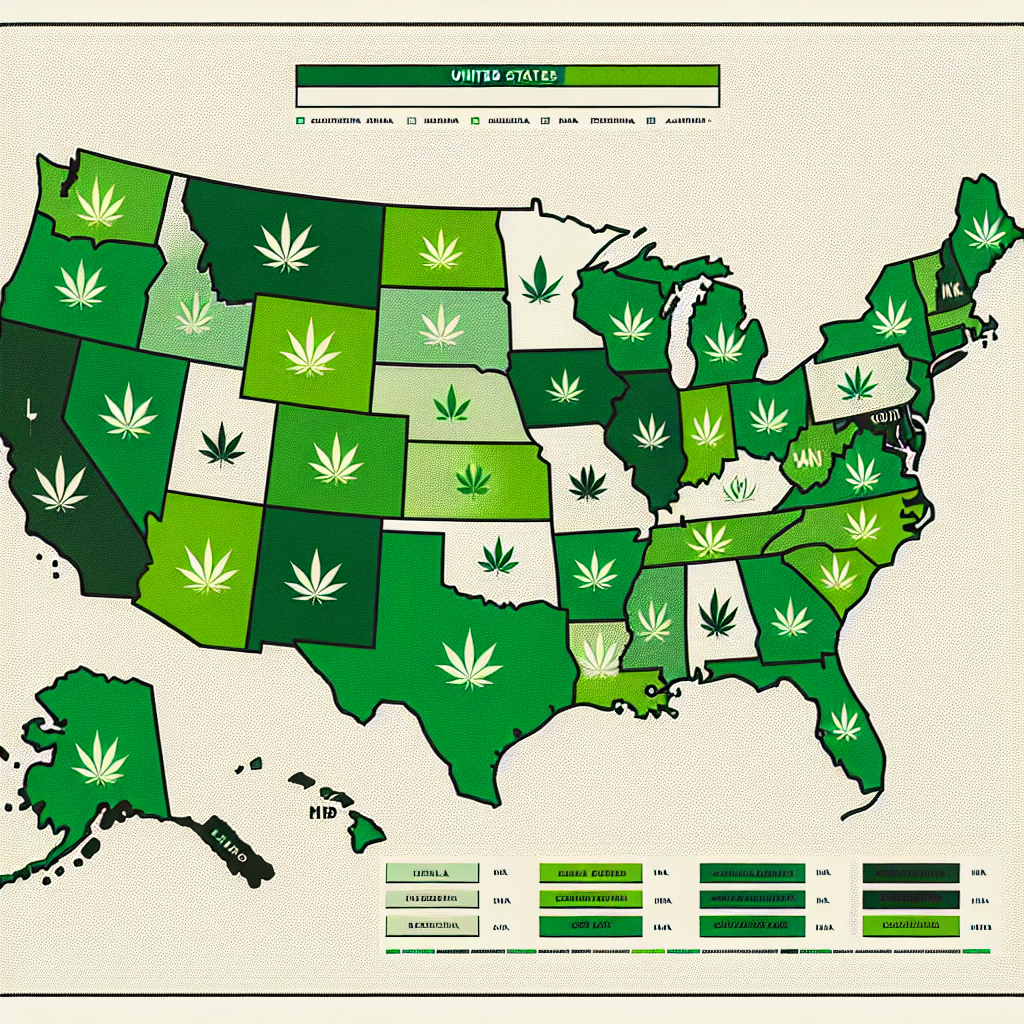
State-by-State Trends in Cannabis Legalization
Over the past few years, several states have made notable progress in cannabis legalization, with the trend only accelerating in 2025. States like New York, Virginia, and New Mexico have implemented comprehensive legislation that allows for both recreational and medical use. The New York Cannabis Law, passed in 2021, has been particularly influential, setting a precedent for a more equitable cannabis market that prioritizes social justice and minority-owned businesses. This law has not only opened the doors for recreational use but has also fostered an ecosystem supporting the industry through regulated licenses and taxation, which serves to benefit state budgets.
Virginia has also made headlines by becoming one of the first Southern states to legalize adult-use cannabis. With its legislation that took effect in July 2021, Virginia has simultaneously focused on decriminalization and expungement for past cannabis-related offenses, reflecting a nationwide movement towards rectifying historical injustices. New Mexico followed suit in 2022, catalyzing a wave of economic opportunities through its licensing system. This influx of legal markets is contributing to state coffers while providing consumers legal access to a product that has been stigmatized for decades.
The Impact of Public Opinion on Cannabis Legislation
One of the most significant drivers of cannabis legalization in 2025 is the evolving public opinion surrounding marijuana use. According to a 2023 Gallup poll, approximately 70% of Americans now support legalization—a significant increase compared to just 12% in 1969. This shift is influenced by various factors, including increased awareness of cannabis’s medicinal benefits, the push for social equity, and the rising acceptance of cannabis as a legitimate form of recreation.
Public sentiment has also played a pivotal role in influencing state legislators to rethink existing laws. Activist campaigns and grassroots movements have mobilized citizens to advocate for change, pushing lawmakers to consider new legislation that reflects public desires. For instance, Massachusetts’s proactive approach to cannabis regulation is a direct result of citizen initiatives, which have shortened the path for legalization compared to states that rely solely on legislative measures. This combination of public opinion and activism forms the backbone of the ongoing shift toward widespread cannabis acceptance.
Economic Implications of Cannabis Legalization
The financial benefits of cannabis legalization cannot be understated, especially at a time when many states are seeking new revenue streams amid budgetary constraints. In 2025, reports show that states with legal cannabis programs have generated billions in tax revenue, which is being channeled into public services, education, and infrastructure projects. Colorado, a pioneer in cannabis legalization, continues to serve as a model, reporting more than $2 billion in tax revenue since the inception of its recreational program in 2014, with funds going towards schools and public safety.
Furthermore, the cultivation and retail of cannabis create job opportunities in a burgeoning industry that is less affected by economic downturns compared to traditional sectors. The Bureau of Labor Statistics forecasts that employment opportunities in the cannabis industry may grow by over 30% annually in legal states through 2030, signifying not just a transformation in cannabis policy but also a significant economic opportunity that aligns with public demand for jobs and responsible usage. This economic aspect has been a key selling point for proponents of legalization, fostering bipartisan support in states where political affiliations have typically hindered such progress.
Challenges and Considerations in Cannabis Policy
Despite the progress made in cannabis legalization, challenges remain largely centered around regulatory frameworks, public health considerations, and the disparities between state and federal law. One prominent issue involves banking and financial services; many cannabis-related businesses remain unbanked due to the federal prohibition of cannabis, making it difficult for these enterprises to operate within a traditional financial system. As of 2025, dialogues among lawmakers in various states and Congress are ongoing to address these banking issues, which could significantly influence the stability and growth potential of the legal cannabis market.
Public health is another area of concern, as states grapple with establishing guidelines for responsible use, marketing, and education. While legalization aims to reduce risks associated with the black market, there is a growing need for regulatory measures that ensure product safety and prevent underage usage. Research into the long-term effects of cannabis use is still evolving, and while advocates promote its medicinal use, the public health implications require careful monitoring to mitigate risks associated with widespread accessibility.
Finally, the issue of equity remains at the forefront of cannabis legalization discussions. States are increasingly recognizing the importance of implementing social equity programs to ensure that those communities adversely affected by historical cannabis prohibitions can participate in the legal market. This includes various initiatives aimed at eliminating barriers to entry for marginalized groups, providing financial assistance, and ensuring diversity in ownership. The challenge lies in the effective execution of these programs, as many states are still in the early stages of establishing robust frameworks.
Future Directions in Cannabis Legislation
Looking ahead, cannabis legislation in the United States is poised for continued evolution as societal norms and economic interests converge. The movement toward federal legalization is gaining momentum, with groups advocating for the passage of legislation like the MORE Act, which seeks to decriminalize cannabis at the federal level. Proponents argue that such changes could unify state regulations, ease banking restrictions, and allow for more extensive public health initiatives, creating a comprehensive approach to cannabis management.
Moreover, advancements in research and public health messaging are likely to influence future cannabis laws. As more studies emerge highlighting both the benefits and potential drawbacks of cannabis consumption, lawmakers will be faced with complex decisions regarding dosage, labeling, and marketing practices. Engaging with scientific communities and adapting to new findings will be crucial for states looking to create effective cannabis policies that prioritize public health while also capitalizing on economic opportunities.
Finally, the role of technology in the cannabis industry will continue to expand, leading to innovative solutions in cultivation, distribution, and consumer education. From blockchain technology enhancing traceability to artificial intelligence improving cultivation practices, the surge of technological advancement within the cannabis sector promises a future that is not only economically viable but also focused on sustainability and social responsibility.
Conclusion
As we advance through 2025, the cannabis landscape in the United States is characterized by rapid changes, driven by evolving public attitudes and economic considerations. State-by-state trends illustrate the diverse approaches to legalization, while public opinion continues to play a pivotal role in shaping legislation. The economic implications present significant opportunities for growth, yet challenges around regulation, public health, and equity remain in need of attention.
Looking ahead, the importance of comprehensive policies that address the multifaceted aspects of cannabis legalization will be paramount. As states work to create effective frameworks, they will need to balance economic benefits with social justice and public health priorities. As cannabis continues to shed its stigmas, its future in the United States shapes up to be both promising and complex.
FAQs
What states have legalized cannabis for recreational use as of 2025?
As of 2025, numerous states, including California, Colorado, New York, Massachusetts, and New Mexico, have legalized cannabis for recreational use.
What are the economic benefits of cannabis legalization?
Cannabis legalization provides significant economic benefits, including the generation of tax revenue, job creation, and increased tourism, which contribute to state budgets and local economies.
How do social equity programs work in cannabis legalization?
Social equity programs aim to rectify past injustices related to cannabis prohibition by ensuring that individuals from marginalized communities have access to the benefits of legalization, including financial assistance and opportunities in the cannabis industry.
What are the public health concerns related to cannabis use?
Public health concerns include potential addiction, mental health impacts, and the risks associated with underage use. Policymakers must address these issues through education and responsible regulation.
What initiatives are being discussed for federal cannabis legalization?
Legislation such as the MORE Act is being discussed to decriminalize cannabis at the federal level, which could establish a unified legal framework across states and alleviate banking restrictions for cannabis businesses.