Balancing Power: The U.S.-China Rivalry in the 21st Century
Introduction
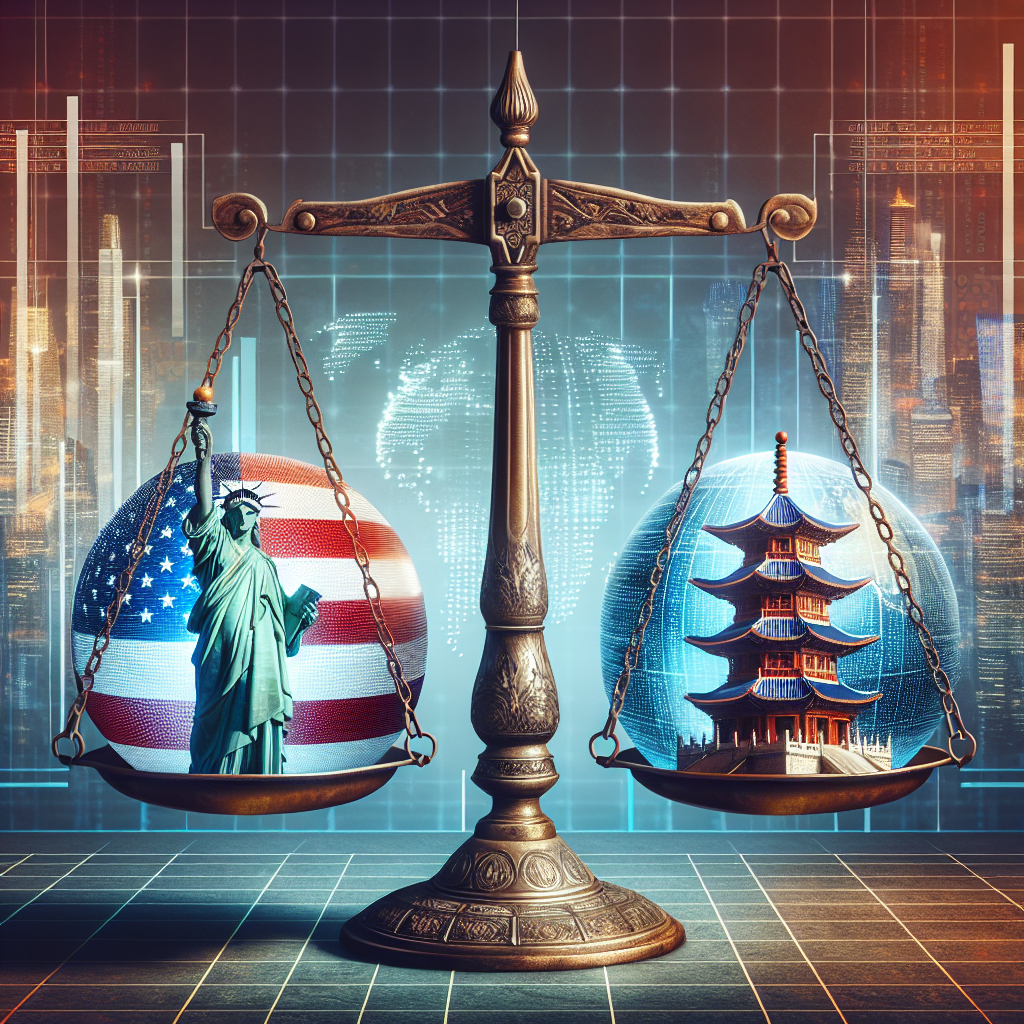
As we navigate through 2025, the U.S.-China rivalry has increasingly defined international relations, global security, and economic policies. “Balancing Power: The U.S.-China Rivalry in the 21st Century” is a pivotal theme that encapsulates the strategic, ideological, and economic contest between these two superpowers. This rivalry goes far beyond mere competition; it shapes alliances, influences economies, and even redefines what it means to be a global power in the modern age. Understanding this complex relationship is crucial for comprehending the current geopolitical landscape and its implications for the future.
The Historical Context of U.S.-China Relations
To grasp the intricacies of the U.S.-China rivalry, we must first delve into its historical roots. The relationship between the U.S. and China has evolved significantly since the end of World War II, marked by a series of diplomatic and ideological shifts. In the early years, the U.S. viewed China primarily through the lens of its anti-communist stance, especially during the Korean War and the subsequent Cold War period. The Nixon Administration’s landmark trip to China in 1972 redefined the relationship, paving the way for diplomatic recognition in 1979 and opening up avenues for trade and cultural exchanges.
However, the post-2000 era saw a resurgence of competition as China emerged as a formidable economic powerhouse. The introduction of China’s “Belt and Road Initiative” marked a significant shift in its global ambitions, actively challenging U.S. influence in developing nations. The resulting economic interdependence between the two nations fostered both collaboration and conflict, leading to the complex dynamics that define their relationship in 2025.
The Economic Dimensions of the Rivalry
The economic dimensions of the U.S.-China rivalry cannot be overstated. As of 2025, both countries are leading economic drivers in a global economy still reeling from the effects of the pandemic, supply chain disruptions, and the rush toward digital transformation. China’s rapid growth, bolstered by significant investments in technology and infrastructure, has positioned it as the world’s second-largest economy, and its export-led growth strategy has put pressure on American manufacturing sectors.
Trade tensions between the U.S. and China have been heightened by tariffs and restrictions on technology transfer. The ongoing discussions surrounding semiconductors, artificial intelligence, and green technology have not only economic implications but also strategic ones in terms of national security. The U.S. has recognized the necessity to remain competitive in high-tech industries and has initiated policies aimed at protecting its innovations, thereby influencing global supply chains and technology standards.
The Geopolitical Implications of the Rivalry
The geopolitical implications of the U.S.-China rivalry are extensive. As tensions escalate, each nation has sought to strengthen alliances and expand its influence across various regions. The U.S. has reinforced its partnerships with traditional allies like Japan, South Korea, and Australia through initiatives like the Quad (Quadrilateral Security Dialogue). These alliances aim to counterbalance Chinese expansionism in the Indo-Pacific region, particularly in the South China Sea, where China’s militarization of artificial islands poses a direct challenge to freedom of navigation.
On the other hand, China has pursued a strategy of developing relationships with countries in Asia, Africa, and Latin America, leveraging its economic power to create a network of influence. The Belt and Road Initiative exemplifies this strategy, offering infrastructure investments in exchange for political support and access to natural resources. By promoting an alternative vision of global cooperation, China aims to shift the balance of power in its favor, presenting itself as a leader in the narrative of globalization as the U.S. has become more insular.
Furthermore, the rivalry has sparked a new arms race, particularly in the realm of cybersecurity and artificial intelligence. Both nations are investing heavily in these domains, seeking not only technological superiority but also the ethical high ground. As each side attempts to outpace the other, the risk of miscalculation or confrontation grows, necessitating a renewed focus on diplomacy and strategic stability.
The Role of Ideology in the U.S.-China Rivalry
Ideology plays a crucial role in shaping the narratives around the U.S.-China rivalry in 2025. The United States often promotes democratic values and human rights as cornerstones of its foreign policy, framing its competition with China as a struggle between democracy and authoritarianism. This ideological battle has intensified in recent years, with events in Hong Kong and the treatment of Uighur Muslims serving as flashpoints for U.S. criticism of China. Washington’s narrative positions itself as a champion of liberal democracy, advocating for global norms that are often at odds with China’s more authoritarian approach.
China, conversely, has positioned itself as a defender of sovereignty and cultural values, arguing that its political model aligns with the preferences of its citizens and rejects Western critiques as a form of imperialism. This ideological framing allows China to bolster its legitimacy domestically while rallying support from other countries that may feel marginalized or threatened by Western hegemony. The Chinese Communist Party promotes the idea that its governance model offers stability and economic growth, challenging the premise that democracy inherently leads to better outcomes.
As the rivalry unfolds, the ideological dimension complicates diplomatic engagement between the two nations. Each seeks to reshape the global order according to its principles, creating a multifaceted struggle that extends beyond military and economic considerations to touch on values, governance, and international norms.
Future Scenarios and Strategic Considerations
Looking ahead, several scenarios could unfold as the U.S.-China rivalry continues to evolve. The most optimistic scenario involves a precarious coexistence, where both powers manage to balance their interests and find common ground on issues like climate change, global health, and trade. Collaborative efforts in these areas could foster a more stable international environment, reducing the risk of military conflict while allowing for the possibility of renewed engagement and interdependence.
However, a more pessimistic scenario may manifest if tensions continue to escalate. This could lead to a fragmented global order, characterized by competing spheres of influence and a decoupling of economies. In such a world, nations may be compelled to choose sides, further entrenched in zero-sum competition rather than constructive collaboration. The implications of such fragmentation would ripple across global supply chains, technological ecosystems, and geopolitical alliances, with far-reaching consequences for global stability.
Finally, the role of third-party nations and international organizations could be critical in shaping the future landscape of the U.S.-China rivalry. Countries like India, Brazil, and African nations may play pivotal roles in mediating conflicts or aligning with either power, reflecting their own strategic interests. Similarly, institutions like the United Nations, World Trade Organization, and regional entities must grapple with the challenges posed by U.S.-China competition, redefining their relevance and effectiveness in addressing contemporary global issues.
Conclusion
The “Balancing Power: The U.S.-China Rivalry in the 21st Century” is not just a tale of competition but of complex interrelationships shaped by historical context, economic factors, geopolitical maneuvers, ideological divisions, and future uncertainties. As of 2025, this rivalry significantly influences global dynamics, requiring an understanding of not only the challenges but also the opportunities for cooperation. The path forward demands careful navigation, as both nations grapple with their roles on the world stage while considering the impact of their actions on global peace and prosperity.
FAQs
1. What are the main causes of the U.S.-China rivalry?
The main causes include economic competition, differences in political ideology, historical tension, and strategic military expansion in key regions.
2. How does the U.S.-China rivalry affect global trade?
The rivalry has led to increased tariffs, trade restrictions, and a push towards national supply chains, affecting global markets and trade dynamics.
3. What is the significance of the Belt and Road Initiative?
The Belt and Road Initiative is a key strategy for China to expand its global influence through infrastructure investments, creating economic dependencies that counter U.S. power.
4. Can the U.S. and China cooperate on global issues?
Yes, there are opportunities for cooperation on issues like climate change, public health, and non-proliferation, but mutual distrust complicates these efforts.
5. What future scenarios could emerge from the U.S.-China rivalry?
Possible scenarios include coexistence with cooperation, fragmentation of the global order, or a new balance of power influenced by third-party nations and international organizations.