Political Debates: A Platform for Substance or Spectacle?
Political Debates: A Platform for Substance or Spectacle?
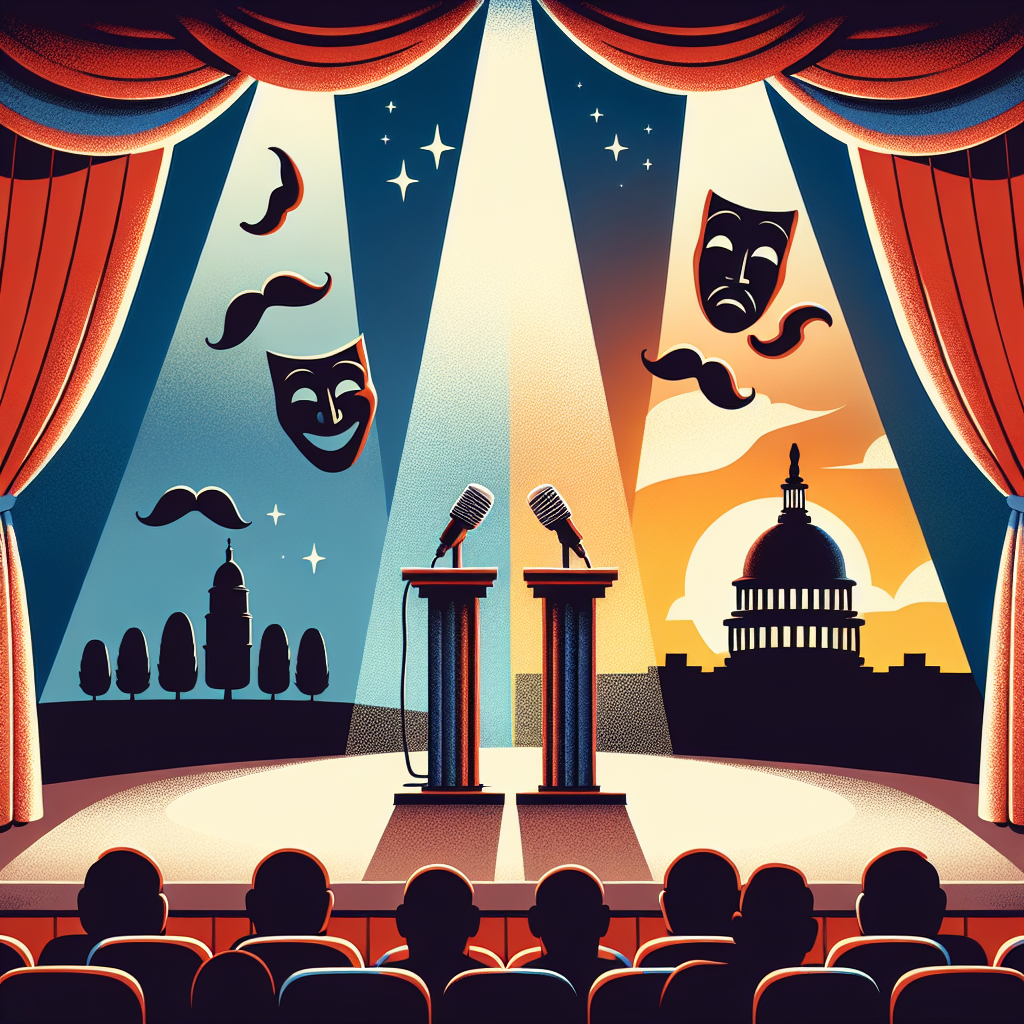
In today’s fast-paced, media-driven political landscape, debates have become a focal point for candidates to showcase their policies and combat their opponents. As we navigate the political climate of 2025, the question arises: Are political debates serving as a platform for substantive discussion, or have they devolved into mere spectacles designed for entertainment? This article examines the roles political debates play in shaping public opinion, the evolution of their format, and the impact of modern technology on how we perceive these events.
The Evolution of Political Debates: From Substance to Spectacle
Political debates have a storied history, dating back to the 1858 Lincoln-Douglas debates, which emphasized intellectual discourse and deep policy discussion. These early debates were perceived as informative public forums where candidates articulated their views and responded to the real concerns of their constituents. Contrast this with the current era, where debates are often overshadowed by theatrics and soundbites. The transition from earnest discussions to high-stakes performances raises concerns about the effectiveness of these platforms in educating voters about crucial issues.
The first televised presidential debate in 1960 between John F. Kennedy and Richard Nixon marked a turning point, showing how visuals and charisma could sway public perception. This transition has only intensified with the advent of social media and the 24-hour news cycle. Candidates now prioritize style and appeal over substantive policy debate, leading to a culture where moments of drama, such as a well-timed quip or a dramatic rebuttal, can overshadow meaningful conversations about governance. With the rapid development of digital platforms, debates increasingly resemble entertainment events rather than forums for public deliberation.
The Impact of Social Media on Political Debates
In 2025, social media plays a pivotal role in shaping the dynamics of political debates. Platforms like Twitter, TikTok, and Instagram enable candidates to reach vast audiences instantly. This immediacy can have both positive and negative ramifications. On one hand, social media allows candidates to amplify their messages and rebut attacks in real time, effectively engaging voters who might not tune into traditional debate coverage. However, this also leads to a focus on soundbites that can be easily shared, often at the expense of nuanced discussion.
Moreover, the structure of debates has evolved to accommodate these platforms. With the rise of influencer culture, candidates are increasingly engaging with social media personalities to boost their visibility and relatability. Yet, this trend further distances the debate from substantive policy discussions. Voters may find themselves more enamored by candidates’ ability to engage with memes and trends rather than their understanding of complex issues like healthcare, education, and climate change. This shift challenges the very fabric of democratic discourse, where informed voting should ideally stem from an understanding of substantial policy differences.
Debate Formats and Their Effectiveness
As we move further into the 2020s, the format of political debates continues to evolve, with many varying approaches and styles aimed at engaging modern audiences. Traditional formats often included opening statements and extended Q&A sessions; however, newer formats employ town halls, one-on-one interviews, and even moderated discussions that draw on viewer questions. Each of these styles has its strengths and weaknesses, significantly influencing the effectiveness of the debates in delivering substantial content.
The introduction of digital town halls, for instance, allows more direct voter engagement, where the audience poses questions, bringing diverse perspectives into the conversation. Yet, it poses challenges in ensuring that all issues are given equal weight and that the candidates genuinely respond to inquiries rather than delivering pre-determined messages. This reliance on audience interaction further blurs the lines between substance and spectacle, as the performances must cater not only to the substance of their responses but also to the perceptions of their audience.
Additionally, the involvement of fact-checkers and real-time polling during debates aims to preserve the integrity of the discussion. However, this practice can sometimes detract from the organic flow of dialogue that debates are supposed to promote. The constant pressure to maintain public favor can make candidates hesitant to engage in deep, potentially divisive policy conversations, instead opting for safer, more palatable positions that ensure their likability.
The Role of the Audience in Shaping Debate Outcomes
The audience’s role during political debates has become increasingly significant as we progress through 2025. Viewers are not just passive observers; they actively participate through social media, instant reactions, and even live polling. Their perceptions and engagement have the power to sway public opinion almost instantaneously, making candidates’ performances in front of the camera critically important. This immediacy can lead to a fixation on presentation rather than policy comprehension.
Moreover, with political debates broadcasted across multiple platforms, the fragmentation of viewership presents challenges in unifying national discourse. Politically engaged audiences often congregate within echo chambers where they seek affirmation rather than understanding, heightening divisions rather than fostering constructive debate. Consequently, debates can reinforce existing biases rather than challenge voters to evaluate candidates based on substantive issues.
Furthermore, the psychographic profiling of audiences on various platforms allows campaigns to tailor their messages. This can lead to a more significant spectacle-oriented approach where candidates emphasize style, personality, and emotional appeals rather than detailed policy proposals. As candidates strive to fit their messages into 280-character tweets or catchy soundbites, the potential for miscommunication and oversimplification increases, further detracting from substantive policy discussions that voters desperately need to make informed choices.
The Future of Political Debates: Balancing Substance and Spectacle
As political debates evolve, the challenge lies in striking the right balance between engaging formats and substantive discussion. The future of debates in democracy may increasingly require a reexamination of their purpose, moving away from shallow entertainment toward deep engagement with critical policy issues that matter to voters. Innovators in the political landscape have begun to propose hybrid formats, incorporating serious policy discussions interspersed with audience engagement to maintain interest while ensuring that substantive debate is not sacrificed.
Additionally, educating the audience plays a crucial role in enhancing the effectiveness of political debates. Voter education initiatives and strong partnerships with media platforms can provide contextual information, enabling audience members to engage meaningfully with the content presented during debates. Creating a more informed electorate has the potential to encourage candidates to prioritize substance and engage in rigorous dialogue, fostering a healthier democratic process.
Technological advancements will also shape the future of political debates. Virtual reality (VR) and augmented reality (AR) might play a role in helping voters experience debates in immersive ways, providing contextual understanding of issues at stake. If harnessed correctly, technology can bridge the gap between spectacle and substance, making political debate not just a visual performance but an educational opportunity that empowers voters to make informed decisions.
Conclusion
As we reflect on the state of political debates in 2025, it’s clear that the platform serves as both a stage for political performance and a potential avenue for substantive discourse. While the influence of social media continues to redefine how candidates interact with voters, it is crucial to seek a balance that emphasizes serious discussion over mere spectacle. The evolution of debate formats, the inclusion of audience engagement, and the necessity for voter education will shape the future of these indispensable platforms. Ultimately, the integrity of political debates as tools for enlightenment, rather than mere entertainment, rests in the hands of both candidates and voters alike.
FAQs
What is the historical significance of political debates?
Political debates have played a crucial role in the electoral process since the Lincoln-Douglas debates of 1858, emphasizing the importance of policy discussion and informed electorates.
How has social media changed the landscape of political debates?
Social media has transformed political debates by providing immediate platforms for candidates to engage with voters, often prioritizing soundbites over substantive discussions.
What are the different formats of political debates?
Debate formats include traditional moderated discussions, town halls, candidate forums, and digital interactions that allow for audience participation and engagement.
What challenges do modern political debates face?
Modern debates face challenges such as maintaining substance amidst entertainment factors, ensuring audience engagement without sacrificing policy discussions, and combating misinformation in the era of social media.
How can political debates be improved for future elections?
Improvements could include hybrid formats that balance entertainment with substance, enhanced voter education initiatives, and the use of technology to create immersive debate experiences.