Analyzing Partisan Gerrymandering and Its Implications
Analyzing Partisan Gerrymandering and Its Implications
Partisan gerrymandering has emerged as a significant challenge in the American democratic process, fundamentally altering how voters are represented. As we step into 2025, the repercussions of gerrymandering continue to unfold, transforming the landscape of electoral politics and public policy. This article will delve into the intricacies of gerrymandering, its historical context, and its profound implications on democracy, electoral fairness, and social justice.
Understanding Gerrymandering: Definition and Historical Context
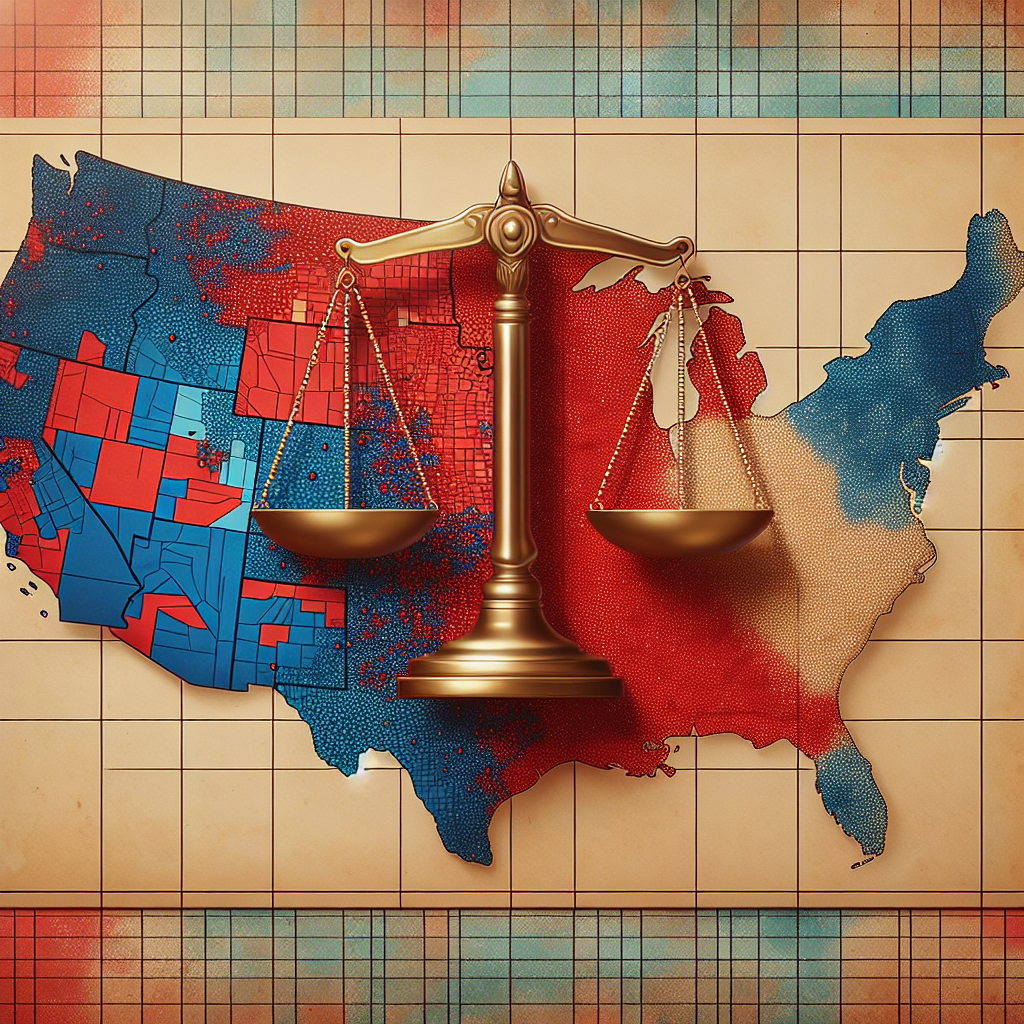
Gerrymandering is the strategic manipulation of electoral district boundaries to favor one political party over another. The term originated in 1812 when Governor Elbridge Gerry of Massachusetts signed a bill that redistricted the state to benefit his party, leading to the creation of a district resembling a salamander. Throughout American history, gerrymandering has evolved, with both major political parties employing it to secure undue advantages in elections. By concentrating or diluting specific voter demographics, parties can enhance their electoral prospects, often at the expense of fair representation.
In recent years, the proliferation of sophisticated data analytics and mapping technologies has intensified the gerrymandering debate. Algorithms and GIS (Geographic Information Systems) now enable parties to fine-tune district maps with unprecedented precision, raising concerns over accountability and transparency. 2025 marks a pivotal moment as several states grapple with the consequences of gerrymandering, leading to renewed calls for reform and increasing scrutiny from citizens and advocacy groups.
The Mechanisms of Partisan Gerrymandering
Partisan gerrymandering operates primarily through two techniques: “packing” and “cracking.” Packing involves concentrating as many voters of one political party into a single district, thus minimizing their influence in adjacent areas. For instance, if a party can funnel all potential supporters into one district, they are guaranteed a significant win there while ensuring that neighboring districts lean away from that party. Conversely, cracking disperses a political party’s supporters across various districts to dilute their voting power. This method effectively reduces their chances of winning multiple districts.
These tactics highlight the manipulation of electoral maps to create “safe” districts, where one party dominates. In 2025, several states are facing legal challenges that argue such maps undermine democratic principles by preventing competitive elections. As districts become less competitive, voter engagement often declines, leading to apathy and disillusionment among constituents who feel their votes do not count.
The Impact of Gerrymandering on Electoral Outcomes
The ramifications of partisan gerrymandering extend beyond mere electoral outcomes; they fundamentally shape political power dynamics. The manipulation of district boundaries can distort the representation of the electorate in legislative bodies, resulting in a disproportionate allocation of seats relative to the actual votes cast. For instance, in states where a party holds a significant majority, gerrymandering can lead to one party winning a supermajority of seats while receiving only a minority share of popular votes. This often leads to a misrepresentation of public sentiment, as elected officials may not reflect the views and desires of their constituents.
Moreover, partisan gerrymandering can undermine the quality of governance. When elected representatives operate in “safe” districts, their electoral security can lead to complacency, reduced accountability, and a disconnection from the electorate’s needs. This phenomenon can hinder effective policy-making and collaboration across the aisle, exacerbating political polarization. By fostering an environment where party loyalty eclipses constituent service, gerrymandering undermines the principles of democratic governance.
Legal Challenges and Reform Efforts
In the wake of growing concerns over partisan gerrymandering, various legal challenges and reform efforts have emerged across the United States. Advocacy groups have increasingly turned to the courts, arguing that extreme partisan gerrymandering violates constitutional principles such as equal protection and free speech. Landmark cases, such as Rucho v. Common Cause (2019), have highlighted the difficulties in adjudicating gerrymandering claims, with the Supreme Court ruling that partisan gerrymandering presents a political question beyond the reach of federal courts.
Despite the ruling, states are not stagnant in their efforts to address gerrymandering. Some have adopted independent redistricting commissions to create more impartial district maps, while others have initiated public referenda to empower voters in the redistricting process. By 2025, a growing movement toward transparency and fairness in redistricting is evident, sparking significant debates in state legislatures and prompting citizens to demand more equitable electoral processes.
Furthermore, technology continues to play a vital role in these reform efforts. Tools that allow for transparent mapping and public input have gained traction, enabling citizens to engage actively in how their voting districts are drawn. The role of technology and community engagement in redistricting remains a key focus as states navigate the complexities of fair representation.
The Future of Partisan Gerrymandering: Trends and Implications
As we move further into 2025, several trends emerge that could shape the future of partisan gerrymandering and its implications for American democracy. The ongoing advancements in data analytics and artificial intelligence may lead to even more sophisticated means of manipulating district boundaries, complicating efforts to achieve fair representation. This could spur further calls for regulatory frameworks governing the use of such technologies in the redistricting process.
Moreover, demographic shifts across the United States may impact electoral outcomes and gerrymandering strategies. As the population evolves, areas that were traditionally strongholds for one political party may experience significant changes, necessitating adaptive gerrymandering approaches. Understanding these demographic trends and their implications for electoral politics will be crucial for both parties as they navigate the complexities of engaging a diversifying electorate.
Finally, the role of civic engagement and public awareness remains paramount. Grassroots movements, public advocacy, and media attention are essential in pushing for reforms to combat partisan gerrymandering. Engaged voters are more likely to demand equitable representation and hold elected officials accountable. The future of partisan gerrymandering rests not only on legal and technological advancements but also on a revitalized commitment to democratic principles among the citizenry.
Conclusion
Partisan gerrymandering is a complex and multifaceted issue that poses significant challenges to American democracy. As we analyze the implications of this practice for electoral outcomes, governance, and civic engagement, it becomes evident that addressing gerrymandering is critical for restoring public trust in the electoral process. With continued legal scrutiny, reform efforts, and increased public awareness, there is hope for a more equitable and representative system. It is essential for citizens to remain vigilant and engaged, advocating for reforms that uphold the integrity of democracy.
FAQs
What is gerrymandering?
Gerrymandering is the manipulation of electoral district boundaries to favor one political party over another, often resulting in unequal representation.
How does gerrymandering affect elections?
Gerrymandering distorts electoral outcomes by creating “safe” districts that can lead to a disproportionate representation of political parties relative to their actual voter support, often diminishing competitive elections.
What can be done to reform gerrymandering?
Reform efforts include establishing independent redistricting commissions, increasing transparency in map creation, and enacting laws that set standards for fair representation in districting processes. Public engagement is also crucial in advocating for these changes.
What legal challenges have been made against gerrymandering?
Recent legal challenges have focused on whether extreme gerrymandering violates constitutional rights, leading to pivotal cases like Rucho v. Common Cause that have influenced the landscape of legal approaches to gerrymandering.
What role does technology play in gerrymandering?
Advancements in data analytics and GIS have enabled more precise gerrymandering, raising the stakes for fair representation and prompting discussions around regulatory measures governing these technologies in electoral processes.