Examining the Relationship Between National Security and Civil Liberties
Examining the Relationship Between National Security and Civil Liberties
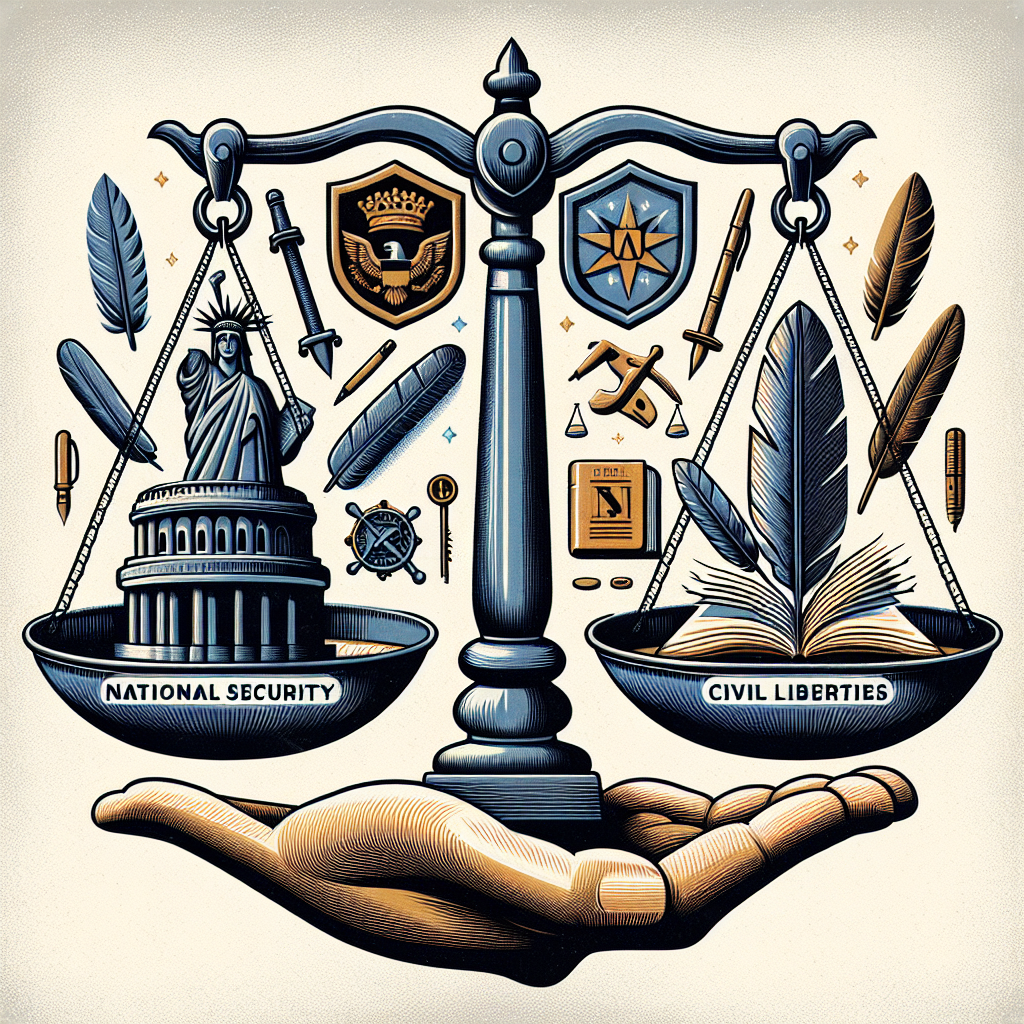
In an era where national security concerns often dominate public discourse, the delicate balance between protecting citizens and preserving civil liberties becomes increasingly significant. As we delve into the complexities of this relationship in 2025, it is essential to examine how governments navigate these competing interests and how the actions taken in the name of security can impact individual rights and freedoms across the globe. This article will explore key themes, trends, and implications of national security policies on civil liberties, offering insights into how societies reconcile these critical aspects of governance.
The Framework of National Security in 2025
The framework of national security in 2025 is shaped by an evolving global landscape marked by technological advancements, transnational threats, and shifting political ideologies. With a rise in cyber threats, biosecurity concerns, and climate-related upheavals, national security strategies have increasingly incorporated a broader range of considerations. Governments are now tasked with not just defending against physical threats, but also confronting the complexities of digital espionage, disinformation campaigns, and the vulnerabilities created by the internet of things (IoT).
In this context, national security policies often reflect a proactive stance, prioritizing measures such as surveillance, intelligence gathering, and emergency powers. However, such approaches can introduce significant tensions with civil liberties. The proliferation of data surveillance tools, as seen in many countries, raises pressing questions about the erosion of privacy rights and the potential for discrimination against marginalized communities. As we examine the relationship between national security and civil liberties, it’s crucial to understand this evolving framework as one that is not just reactive but deeply integrated with societal values.
The Historical Context of Civil Liberties
To fully grasp the current state of civil liberties, one must consider the historical context in which these rights have emerged and evolved. In democratic societies, civil liberties have long been enshrined in foundational legal documents, such as the Bill of Rights in the United States. However, history shows that these liberties are often significantly curtailed during times of national crisis. For instance, during World War II, Japanese internment in the U.S. manifested the stark trade-off between national security and civil liberties, as fears of espionage effectively suspended the rights of entire communities.
Exploring the patterns of historical sacrifice of civil liberties leads us to the present day, where similar narratives unfold as governments justify extensive surveillance programs and monitoring via legislation such as the Patriot Act post-9/11 or the European Union’s GDPR implementing data protections. The historical precedents of infringing on rights during crises demonstrate a recurring trend; however, public response to such measures has evolved, advocating for greater transparency and accountability in the face of security claims.
The Impact of Technology on National Security and Civil Liberties
The rapid advancement of technology has profoundly reshaped the dynamics between national security and civil liberties in 2025. Governments increasingly rely on technologies such as artificial intelligence, biometrics, and big data analytics to enhance their national security capabilities. However, tools that gather and analyse vast amounts of public data can also infringe on individual privacy rights. As evidence mounts regarding breaches and misuses of surveillance data, debates surrounding ethical use in national security remain a hot-button issue.
Moreover, the rise of decentralized technologies, including blockchain and encryption, poses significant challenges to traditional national security frameworks. While these technologies can enhance privacy and data security for individuals, they also present obstacles for law enforcement and intelligence agencies tasked with monitoring potential threats. Balancing the protective capabilities of advanced technology against the rights of citizens presents an ongoing dilemma – where the societal demand for safety can conflict with the inherent value of personal freedoms.
In addition, the interconnection between social media, misinformation, and national security cannot be understated. The ability for states and non-state actors to manipulate information succinctly illustrates how technology fosters vulnerabilities. Civil liberties face new challenges as governments enact policies aimed at countering misinformation, risking overreach by imposing censorship that could inhibit free speech. Hence, navigating these intricate connections requires a sensitive touch, wherein authorities must consider the implications of their actions on democratic engagement while still ensuring public safety.
Public Perception and Resistance to Security Measures
As national security measures evolve, so too does public perception of these actions and the resistance that accompanies potential overreach. The emergence of grassroots movements advocating for civil liberties has gained momentum, especially in light of heightened surveillance and data privacy invasions. Citizens are increasingly vocal about their rights, pushing for policies that safeguard personal freedoms while maintaining effective security protocols. Public outcry against programs that seem to infringe on civil liberties often reflects a growing awareness and skepticism towards government intentions.
Additionally, in the face of technological overreach, platforms for dissent have evolved. Online advocacy and social movements focus on highlighting abuses of power within national security frameworks, utilizing social media to galvanize support and bring attention to overreaching policies. High-profile cases involving misuse of surveillance tools or wrongful detentions serve to galvanize the public, illustrating the critical role of accountability within both government actions and the judicial system.
Moreover, these movements often intersect with discussions on broader societal issues, including racial justice, gender equality, and immigration rights. The fight for civil liberties is increasingly understood as part of a larger movement advocating for systemic change in governance. Engaging with these intersecting narratives is essential for responding to contemporary security measures that can disproportionately affect marginalized communities.
The Way Forward: Reconciliation of National Security and Civil Liberties
To navigate the complex relationship between national security and civil liberties, a multi-faceted approach is required. Policymakers must engage in transparent dialogues with civil society organizations, technology experts, and ethnic communities to develop policies that reflect the diversity of perspectives within society. Promoting justice and civil rights as inseparable elements of national security should form the backbone of recovery processes, further reinforcing democratic principles.
At the same time, the establishment of rigorous oversight mechanisms can help bridge the divide between national security imperatives and civil liberties protections. This includes creating independent review bodies tasked with assessing the legality of surveillance programs and ensuring adherence to ethical standards. Such mechanisms foster public trust in government initiatives while limiting the potential for abuse of power.
Lastly, education plays a critical role. Governments must prioritize civil liberties education that informs citizens of their rights and promotes engagement with civic institutions. By fostering an informed public, the potential impact of civic engagement can be amplified, leading to a society that remains vigilant against encroachments on rights while appropriately addressing legitimate security concerns.
Conclusion
Examining the relationship between national security and civil liberties in 2025 underscores the necessity of striking a delicate balance in safeguarding both public safety and individual rights. Historical contexts reveal recurring patterns of overreach, while technological advancements and public perceptions further complicate this landscape. Engaging the public, instituting robust oversight, and fostering education around civil liberties can pave the way toward a more equitable framework that respects the rights of individuals while addressing legitimate security needs. As societies continue to grapple with these complexities, understanding and prioritizing the interplay between national security and civil liberties will remain crucial in shaping democratic futures.
FAQs about National Security and Civil Liberties
1. What are civil liberties?
Civil liberties refer to individual rights protected from government interference, including freedom of speech, the right to privacy, and the right to due process. They are foundational components of democratic societies that ensure personal freedom and protection from arbitrary government actions.
2. How does national security impact civil liberties?
National security measures can impact civil liberties by imposing regulations that limit individual rights in the name of protecting citizens from threats. This can include surveillance measures, restrictions on free speech, and limitations on movement, often justified during times of crisis or perceived threats.
3. What role does technology play in the intersection of national security and civil liberties?
Technology plays a dual role by enhancing national security capabilities through tools like surveillance and data analysis, while simultaneously posing risks to civil liberties through invasive practices. Balancing the use of technology for security with respect for individual rights remains a significant challenge.
4. How can citizens protect their civil liberties?
Citizens can protect their civil liberties by staying informed about their rights, engaging with advocacy groups, participating in public discourse, and holding governments accountable through legal channels. Public awareness and activism play vital roles in fostering a culture of respect for civil liberties.
5. Why is public perception important in discussions about national security and civil liberties?
Public perception is crucial as it shapes policy debates and influences the government’s approach to security measures. A vigilant and informed public can challenge overreach and advocate for policies that uphold civil liberties, ensuring that the values of democracy are preserved amidst security concerns.