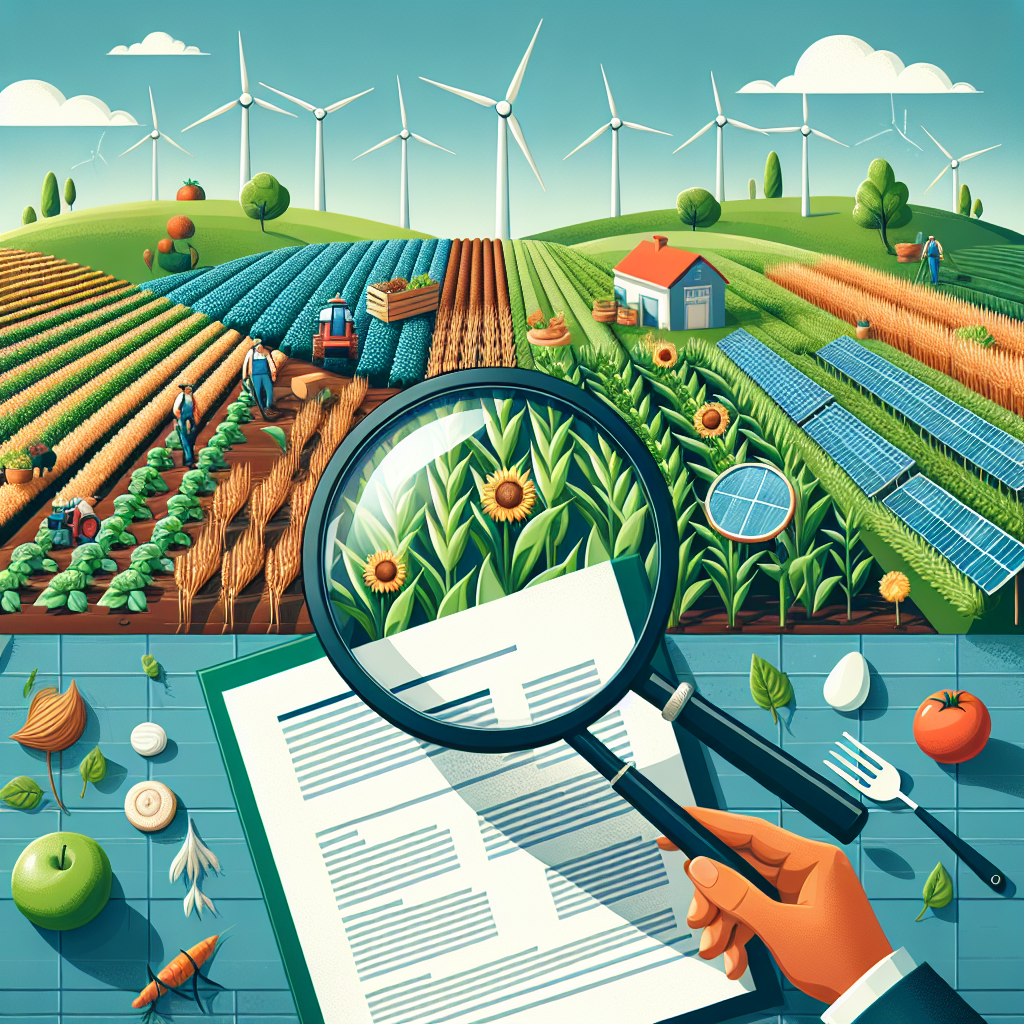
Exploring Agricultural Policy Revisions for Sustainability
Introduction
As we move further into 2025, the pressing need for sustainable agricultural practices becomes ever more apparent. Agricultural policy revisions play a crucial role in addressing issues related to climate change, food security, and ecological balance. This article delves into the latest developments in agricultural policy, exploring how revisions can promote sustainability and reshape the farming landscape. By examining current trends, innovative practices, and the role of technology, we can better understand how these policies can pave the way for a sustainable future in agriculture.
The Role of Agricultural Policy in Sustainability
Agricultural policy shapes the framework within which farming operates, influencing everything from production methods to environmental stewardship. In 2025, a renewed emphasis on sustainability is evident across various nations, as policymakers recognize that traditional agricultural practices frequently lead to soil degradation, water scarcity, and loss of biodiversity. Policies that promote sustainable practices aim not only to mitigate these challenges but also to enhance the resilience of food systems.
One significant aspect of this evolved policy framework is the integration of sustainable farming techniques such as agroecology and precision agriculture. These methods focus on optimizing resource use while minimizing environmental impact. By providing financial incentives, technical support, and research funding, governments can encourage farmers to adopt sustainable practices that balance productivity with environmental health.
Innovative Technologies Shaping Agricultural Policies
Technological innovations have fundamentally altered agricultural practices, making them more efficient and sustainable. In 2025, the integration of artificial intelligence (AI), machine learning, and advanced data analytics into agricultural policy is becoming more prominent. These technologies help farmers monitor crop health, manage resources, and predict weather patterns, enabling them to make informed decisions that align with sustainable practices.
For instance, AI-driven precision agriculture can greatly reduce pesticide and fertilizer use by applying inputs only where necessary, thus minimizing runoff and protecting surrounding ecosystems. Governments are now looking to incentivize farmers to adopt these technologies through subsidies and grants, ensuring that they are not only economically viable but also environmentally sustainable.
The Importance of Climate Resilience in Agricultural Policies
2025 marks a pivotal year for agricultural policies aimed at enhancing climate resilience. With extreme weather events becoming more common due to climate change, policies are increasingly focused on equipping farmers to withstand and adapt to these challenges. This shift emphasizes the importance of crop diversity, soil health, and regenerative practices that contribute to a robust agricultural ecosystem.
Policymakers are recognizing the value of community input and local knowledge while framing climate-resilient agricultural strategies. By incorporating the experiences of farmers and agricultural experts, policies can be tailored to specific geographical and climatic conditions, promoting sustainable practices that are well-suited to local needs.
Furthermore, regional collaborations and knowledge-sharing initiatives are gaining momentum, enabling farmers to learn from each other’s successes and challenges. Establishing networks that connect farmers with researchers and policymakers can foster innovation and promote practices that enhance climate resilience across various regions.
Policy Frameworks for Sustainable Food Systems
In 2025, there is a clear shift toward policy frameworks that support sustainable food systems. This shift involves comprehensive strategies that address the entire food supply chain, from production to consumption. By focusing on local food systems, policymakers are encouraging shorter supply chains that reduce carbon footprints and promote local economies.
Additionally, policy revisions are being designed to support sustainable land use practices that prioritize conservation and restorative approaches. This includes policies that incentivize crop rotations, the planting of cover crops, and agroforestry systems which enhance biodiversity, sequester carbon, and improve soil health.
Moreover, the inclusion of social equity in agricultural policies is gaining importance. Ensuring that marginalized farmers have equal access to resources and support can result in a more sustainable and equitable food system. This holistic approach seeks to address the interconnectedness of environmental sustainability, social equity, and economic viability within agricultural frameworks.
Global Perspectives on Agricultural Policy Revisions
As countries worldwide grapple with the implications of climate change, food security, and sustainability, agricultural policy revision has become a global concern. In 2025, nations are recognizing the necessity of collaborative efforts to share best practices, research, and resources. Increased international cooperation can lead to the development of more effective policies that align with global sustainability goals.
Furthermore, international agreements and frameworks, such as the Paris Agreement, are influencing national agricultural policies. Countries are now being held accountable for their commitments to sustainable practices and emission reductions. This interconnectedness fosters a sense of urgency but also opens the door for innovative practices that can be implemented at the national level, driven by global examples of successful agricultural policy revisions.
Additionally, there is a growing recognition of the role of technology and innovation in addressing the challenges faced by agriculture worldwide. Global collaborative platforms are emerging to share technological advancements and provide farmers in developing regions access to resources that enhance sustainability and productivity.
Conclusion
As we stand in 2025, it is clear that exploring agricultural policy revisions for sustainability is essential for future food security and environmental health. By embracing innovative technologies, prioritizing climate resilience, and fostering global cooperation, we can create a framework that supports sustainable agricultural practices worldwide. Governments, farmers, and communities must come together to reimagine agricultural policies, ensuring that they are not only effective in addressing current challenges but also equipped to face those yet to come.
FAQs
What are some sustainable agricultural practices promoted by recent policy changes?
Sustainable agricultural practices include crop rotation, agroforestry, organic farming, and integrated pest management, all supported by policies that provide financial incentives and technical assistance to farmers.
How does technology enhance sustainability in agriculture?
Technology, such as precision agriculture and AI, improves efficiency in resource use, reduces waste, and helps farmers make data-driven decisions, contributing to sustainable practices.
Why is climate resilience important in agricultural policies?
Climate resilience ensures that agricultural systems can withstand extreme weather events, adapting to climate change while maintaining productivity and sustainable practices.
What role do international agreements play in agricultural policy revisions?
International agreements, like the Paris Agreement, influence national policies by setting commitments for sustainability and emission reductions, encouraging countries to adopt best practices aligned with global goals.
How can farmers be supported in adopting sustainable practices?
Farmers can be supported through subsidies, grants, access to training and resources, and partnerships with local organizations focused on promoting sustainable agriculture.