The Debate Over Universal Basic Income: A Reflection of Political Opinions
The Debate Over Universal Basic Income: A Reflection of Political Opinions
In recent years, the concept of Universal Basic Income (UBI) has transcended academic boundaries and moved into mainstream political discourse, stimulating diverse opinions across the political spectrum. As we stand in 2025, many nations are grappling with the implications of this policy, striving to address automation, job displacement, and economic inequality. The debate over UBI is, thus, more than just an economic proposition; it is a reflection of the differing political opinions that define contemporary society. This article delves into the multifaceted debate surrounding Universal Basic Income, exploring its potential impact on society and the varying political perspectives that influence this contentious issue.
Understanding Universal Basic Income: A Policy Overview
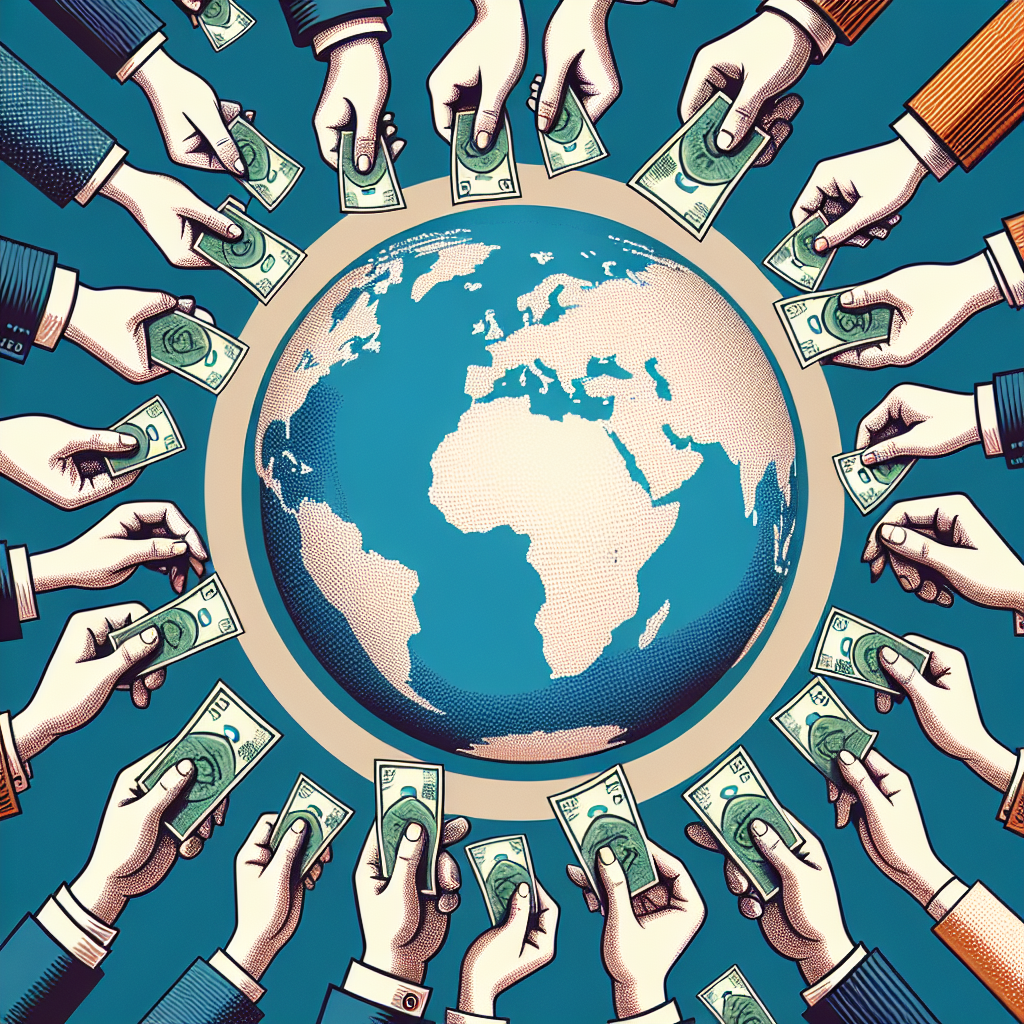
Universal Basic Income is a policy proposal that advocates for providing all citizens with a regular, unconditional sum of money, regardless of their financial status or employment situation. By 2025, various pilot programs and implementations of UBI have taken place worldwide, from the ongoing discussions in the European Parliament to the advancements in tech-driven economies like Silicon Valley. The argument for UBI rests on its potential to reduce poverty, stimulate economic growth, and simplify welfare systems, allowing for a more resilient safety net in times of economic uncertainty. As automation and artificial intelligence continue to reshape job markets, proponents argue that UBI could serve as a fundamental shift in how societies support their citizens.
However, the logistics of implementing UBI face numerous challenges. Critics argue it may lead to disincentivization of work or be financially unsustainable. Many funding mechanisms, such as increased taxes on the wealthy and corporations, have been proposed, yet these remain deeply contentious. Additionally, discussions surrounding the adequacy of UBI in meeting basic needs fuel an ongoing debate over what constitutes a living wage in a rapidly evolving economic landscape. With these arguments framing the political discourse, it becomes imperative to analyze the various ideological perspectives that influence the discourse on UBI.
Political Perspectives on Universal Basic Income: The Progressive Lens
To understand the political landscape surrounding Universal Basic Income, it is essential to explore the progressive viewpoint. Traditionally, left-leaning politicians and activists view UBI as a tool for social justice and equality. In 2025, many progressives argue that UBI is critical in combating systemic issues like poverty and income inequality that have been exacerbated by globalization and technological advancements. With the growing wealth gap, UBI is seen as a means to redistribute wealth, ensuring that everyone, regardless of their social class, can access basic needs and opportunities for personal growth.
Moreover, proponents often highlight that UBI could empower individuals, allowing them to pursue education, entrepreneurship, or caregiving roles that are traditionally undervalued in the economy. By providing financial security, this policy could foster a culture of innovation and creative expression, particularly among marginalized communities. However, advocates also face opposition within their party, as some argue that UBI could divert funds from other essential social programs. This divergence within progressive circles illustrates the complex interplay of political beliefs informing the debate over UBI.
Conservative Opinions on Universal Basic Income: Concerns and Alternative Solutions
Conversely, conservative perspectives on Universal Basic Income often focus on concerns about government spending, personal responsibility, and the potential for UBI to undermine the work ethic. Many conservative critics argue that providing unconditional payments could lead to decreased productivity and a burdensome tax system to finance such a program. The apprehension here stems from a fundamental belief in the value of hard work and the fear that UBI may create a societal norm that discourages employment.
In 2025, some conservatives propose alternative solutions to address poverty and economic insecurity. These alternatives include targeted welfare programs that prioritize assistance for the most vulnerable populations. They argue that rather than providing a universal payout to all citizens, resources should be focused on creating job opportunities, enhancing vocational training, and fostering economic environments that encourage growth. This belief in a “work-first” approach reflects a broader ideological commitment to self-sufficiency and government accountability. The opposition rooted in these political philosophies delineates the broader discourse surrounding UBI.
Despite these opposing views, some conservatives have warmed to the idea of UBI in certain contexts, particularly as trials demonstrate its potential benefits. For instance, pilot projects in various US states where critics observed positive outcomes, such as enhanced community stability and reduced homelessness, are prompting a re-evaluation of previous stances. This illustrates that even among conservative groups, there is a growing recognition of the need to adapt traditional economic ideologies to contemporary challenges.
The Role of Technology and Economic Change in UBI Discussions
The rapid advancements in technology and their implications for the workforce have played a pivotal role in the UBI debate. As automation continues to replace traditional jobs, many experts predict a future with significant job losses, especially in lower-skilled sectors. In 2025, the urgency of this issue is amplified as entire industries reconfigure to accommodate artificial intelligence and robotics. Proponents of UBI argue that these changes make it necessary to rethink how we compensate individuals, creating a compelling case for universal income as a buffer against mass unemployment.
Furthermore, the gig economy has transformed the traditional notion of work. Millions of people engage in freelance or contract work without the stability that full-time positions once provided. In this climate, UBI is seen as a necessary adaptation, offering individuals a safety net while allowing them to explore various income-generating avenues without fear of falling into poverty. Supporters maintain that UBI could provide the flexibility needed in a constantly evolving economic landscape, where people are increasingly required to reinvent themselves professionally.
However, the integration of technological advancements into discussions about UBI also raises critical questions about economic sustainability. Issues such as inflation, economic dependency, and workforce engagement come to the forefront. Critics maintain that simply distributing cash does not equate to meaningful solutions for systemic economic problems. This intricate relationship between technology, economic transformation, and labor paradigms fuels ongoing debates that reflect divergent political opinions.
Global Perspectives on Universal Basic Income: Variations and Experimentation
In examining Universal Basic Income, it is crucial to acknowledge varied international approaches. Countries like Finland and Canada have conducted experiments, leading to substantial findings that inform the global discourse surrounding UBI. In Finland, the trial providing monthly payments to a select group of citizens demonstrated increased well-being and life satisfaction among participants, sparking further interest in broader implementation. By 2025, various nations are assessing these results, considering whether UBI could serve as a blueprint for their social safety nets.
Additionally, emerging economies are also exploring UBI as a viable policy option. In Africa, for example, discussions around UBI are gaining traction as countries seek solutions to tackle extreme poverty. Experiments in places like Kenya provide critical insights into how UBI can stimulate local economies and improve access to education and health services. The interplay of cultural, economic, and political contexts influences how UBI is perceived, creating a diverse landscape of opinions shaped by local realities.
However, the global discourse on UBI also highlights the challenges posed by varying levels of economic development and political will. While some nations gravitate towards UBI implementation, others encounter obstacles such as limited resources and deep-rooted political resistance. As the global community continues to explore these experiments, the outcomes will undoubtedly shape the future of UBI discussions worldwide, reflecting differing political perspectives and their implications for sustainability and equity.
Measuring Public Opinion and UBI’s Political Viability
Public opinion plays a critical role in shaping the discourse around Universal Basic Income, and tracking these sentiments can offer insights into its political viability. Surveys in 2025 reveal a growing acceptance of UBI among younger demographics who face mounting economic pressures, such as student debt and precarious employment. This demographic shift indicates that as economic realities evolve, so too do public attitudes toward policies aimed at reshaping the economic landscape.
Moreover, political leaders and parties are increasingly harnessing this public sentiment to craft their platforms. In several nations, parties advocating for UBI have gained traction, as citizens seek bold solutions to emerging economic challenges. These dynamics illustrate a possible shift in the political conversation, where UBI is not merely a fringe proposal but an integral part of mainstream social policy discussions.
However, the viability of UBI initiatives also depends on political coalitions and the capacity to garner bipartisan support. Historical divisions and entrenched political beliefs can thwart progress, but as empirical evidence and public opinion continue to evolve, the potential for consensus may increase. Engaging with diverse stakeholders, including business leaders, economists, and social justice advocates, will be critical in crafting a comprehensive approach to UBI that addresses political concerns while promoting social equity.
Conclusion
The ongoing debate over Universal Basic Income is a fascinating microcosm of contemporary political opinions, where contrasting ideologies converge and diverge in the face of pressing economic challenges. As we look towards the future, understanding these dynamics is crucial for shaping effective policy that reflects the complexities of modern society. From progressive advocacy for social justice to conservative concerns regarding fiscal responsibility, the varied perspectives on UBI not only signify ideological divides but also emphasize the need for collaborative solutions. Ultimately, as more nations experiment with UBI and public attitudes continue to shift, the path forward will depend on finding common ground and innovative approaches that address the multifaceted realities of our evolving economic landscape.
FAQs
What is Universal Basic Income?
Universal Basic Income (UBI) is a financial support policy that offers all citizens an unconditional, regular payment to ensure basic living standards regardless of their employment status.
How does UBI affect poverty levels?
Proponents argue that UBI can significantly reduce poverty levels by providing financial security, enabling individuals to meet their basic needs, and allowing for greater economic mobility.
What are the main objections to UBI?
Critics of UBI often raise concerns regarding its financial sustainability, potential disincentives for work, and the possibility that it could undermine existing social safety nets and welfare programs.
Have any countries successfully implemented UBI?
While several pilot programs have been conducted, such as in Finland and Canada, no country has fully implemented Universal Basic Income as a national policy to date.
What political parties support UBI?
Support for UBI spans various political parties, with significant backing from progressive groups that advocate for social justice, but interest is also emerging among some centrist and conservative factions, especially in response to technological advancements and changing labor markets.