The Role of Insults and Humor in Political Debates: Friend or Foe?

Introduction
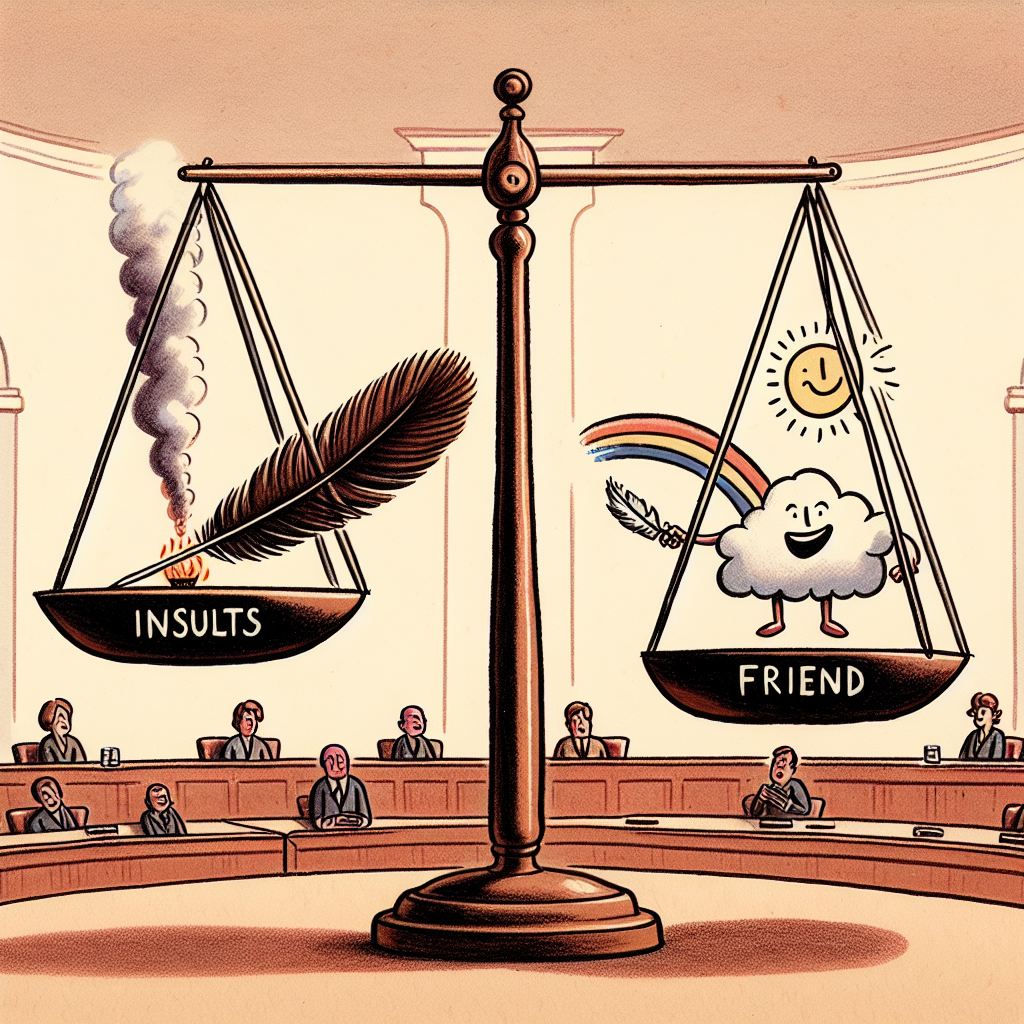
In the realm of political debates, the interplay between insults and humor has sparked numerous discussions among analysts, politicians, and the general public alike. As we navigate the turbulent waters of politics in 2025, understanding the role of humor and insults in political discourse is more critical than ever. Do these tools serve as effective communication vehicles that sharpen criticism or distract from meaningful dialogue? This article explores the multifaceted role of insults and humor in political debates, examining whether they emerge as friends or foes in shaping political narratives.
The Historical Context of Humor and Insults in Political Discourse
Humor and insults have been integral components of political discourse throughout history. From ancient Roman political satire to modern-day televised debates, leaders have employed wit and ridicule to convey their messages and undermine opponents. For instance, the satirical writings of figures like Jonathan Swift in the 18th century set a precedent for political humor that continues today. These humorous critiques often provided more than mere entertainment; they shaped public perception, influencing voters’ opinions and perceptions of authority.
In today’s political landscape, especially as we advance further into the digital age, the importance of humor and insults has only magnified. Social media platforms act as a megaphone for political figures, allowing for rapid dissemination of one-liners or sharp jabs, which can simultaneously entertain and inform. As we witness the rise of meme culture and sound bites, politicians recognize the power of humor to humanize their messages. Yet, these same tools can easily devolve into personal attacks that overshadow substantive discussion, illustrating the thin line between effective political strategy and destructive rhetoric.
The Psychological Impact of Insults in Political Debates
Insults can have a profound psychological impact on both the target and the audience in political debates. Research has shown that derogatory remarks can shift focus away from policy issues, drawing attention to personal characteristics and perceived weaknesses. When a politician resorts to insulting an opponent, it often provokes an emotional response from the audience, which can lead to the reinforcement of preconceived biases. This psychological manipulation can yield short-term gains in the political arena, but it also risks alienating voters who seek substance over sensationalism.
Moreover, the use of insults can also impact the speaker’s credibility. While some may argue that biting humor reflects a candidate’s strength and authenticity, others may perceive it as unprofessional or indicative of a lack of substantive knowledge. In 2025, as political polarization intensifies, voters are increasingly discerning toward the tone and nature of political discourse. A candidate who resorts to insults may rally their base but could also inadvertently disenfranchise moderate voters who prefer civility over hostility. The challenge remains: how to balance the electrifying energy of humor and insults without compromising the dignity essential for fostering constructive political dialogue.
The Role of Humor in Shaping Political Narratives
Humor, when effectively employed, plays a vital role in shaping political narratives and influencing public opinion. Political satire, particularly in the age of social media, can serve as both a critique of governmental actions and a call to action for the electorate. Comedians and satirists are often viewed as cultural barometers, highlighting discrepancies and absurdities within the political system. This form of humor not only entertains but can also galvanize public engagement, encouraging individuals to become more informed about political matters.
Additionally, humor can be a strategic tool for political candidates during debates. A well-timed joke or lighthearted quip can diffuse tension, reframe difficult questions, and reengage disengaged audiences. For example, in debates leading up to the 2024 elections, several candidates successfully utilized humor to connect with voters, creating moments of relatability and warmth that humanized them amid their carefully crafted political personas. However, the effectiveness of humor hinges on context; it risks misfiring or being misinterpreted, especially in emotionally charged scenarios. Therefore, politicians must be adept at reading the room and employing humor judiciously.
The Consequences of Insults in Modern Political Campaigns
In 2025, the consequences of utilizing insults in political campaigns have become increasingly evident. Political leaders who resort to name-calling or personal attacks can polarize their audiences, often leading to a harsher, dichotomous view of the political landscape. This dynamic creates an environment where constructive discourse is minimal, and collaboration among opposing parties becomes increasingly challenging. The trend toward aggressive rhetoric may energize the base, but it risks fostering a toxic culture that stifles diverse opinions and compromising solutions.
Moreover, the repercussions of using insults extend beyond individual debates. Political analysts observe that campaigns characterized by disrespectful exchanges contribute to a broader societal desensitization to disrespect and intolerance. This tendency can embolden individuals to adopt similar tactics in daily life, eroding civil discourse. The normalization of insults as acceptable communication forms heightens division and an adversarial mindset among citizens, further exacerbating political polarization.
As such, the consequences of insults in political debates underscore the critical need for accountability within the political arena. Politicians must recognize the societal impact of their language and consider how their rhetoric affects community dynamics and public trust. Striking a balance between passion and respect could lead to a rejuvenated political climate that prioritizes collaboration over conflict.
The Future of Humor and Insults in Political Debates
Looking ahead to political debates beyond 2025, the future of humor and insults will likely evolve in response to changing social norms and the influence of technology. As the digital age continues to transform the landscape of political communication, politicians and voters will navigate an environment enriched by instant feedback and global connectivity. While humor may remain a tool for engagement, the rise of “cancel culture” and increased public scrutiny may necessitate a shift toward more sophisticated forms of humor that retain critical content without resorting to derogatory remarks.
Furthermore, with the advent of artificial intelligence and machine learning in media analysis, politicians may find themselves held to higher accountability standards regarding their rhetoric. Insights derived from data analytics will enable campaigns to gauge the public’s response to humor and insults, prompting more calculated and strategic decisions regarding their use. Ultimately, the interaction between technology and public perception will shape how humor and insults are wielded in political debates, presenting opportunities and challenges for future leaders.
Additionally, the trend toward authenticity in politics may counterbalance the harshness of insults. As voters increasingly value transparency and relatability, candidates may shift their approach, prioritizing sincerity over sensationalism. This change could promote a new era of civil discourse characterized by humor that uplifts rather than diminishes, leading to more constructive dialogue on substantive issues.
Conclusion
The interplay of insults and humor in political debates is a complex phenomenon that simultaneously serves as both a potent tool for engagement and a potential barrier to constructive dialogue. Understanding the historical context, psychological impacts, and consequences of these tools is critical for navigating the intricate political landscape of 2025 and beyond. While humor can be a powerful narrative-shaping device and facilitate deeper connections between candidates and voters, the ramifications of insults cannot be ignored. As we move forward, the challenge for political leaders will be to harness the power of humor while upholding the civility necessary for fostering a healthier political environment.
FAQs
What is the impact of insults in political debates?
Insults can shift focus away from substantive political issues, provoke emotional responses, and potentially harm a politician’s credibility while energizing their base.
Why is humor important in politics?
Humor helps to humanize candidates, engage audiences, and critique political systems. It can foster relatability and galvanize public engagement when used effectively.
How has technology influenced political humor and insults?
Technology, especially social media, amplifies the immediate impact of humor and insults, allowing them to spread rapidly while also subjecting politicians to increased public scrutiny regarding their rhetoric.