
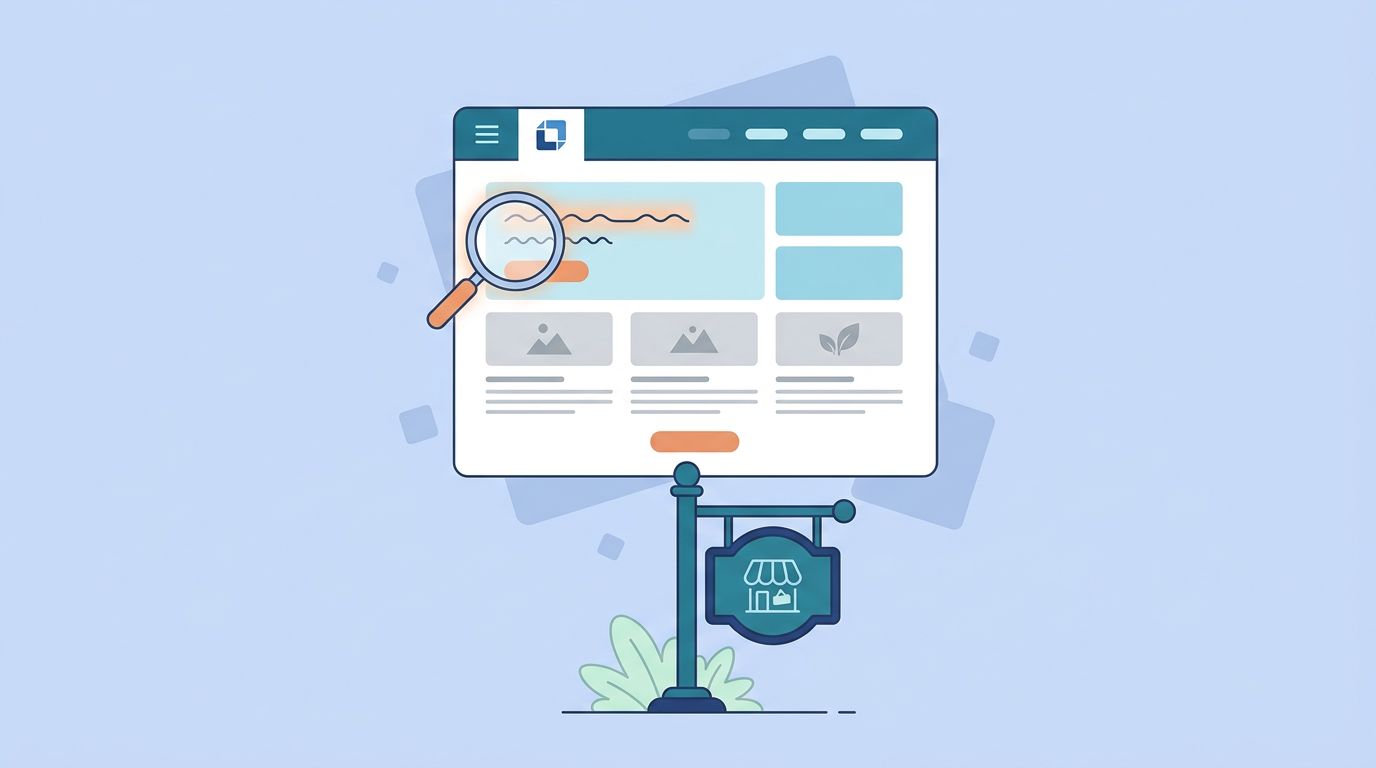
That error looks simple, but it points to a bigger problem. If a tool can’t tell what your site is about, visitors may struggle too.
Most of the time, the issue isn’t code. It’s unclear messaging, mixed topics, or pages that never state the main offer in plain language. Start with clarity, then build stronger signals across the site.
Why this error happens
Search tools and AI systems look for patterns. They scan your homepage, page titles, headings, links, and supporting pages. If those signals don’t line up, the tool may give up and return a vague error.
Think of your website like a storefront. If the sign says “Welcome,” but nothing says what you sell, people hesitate. A crawler does the same thing, only faster.
This message often shows up when a site has one or more of these problems:
- The homepage headline sounds catchy, but says nothing clear.
- The site mixes unrelated topics on the same main pages.
- Service or category pages have thin copy and weak headings.
- Page titles and navigation labels stay too broad, like “Solutions” or “Resources.”
Small sites run into this a lot. A five-page website can work well, but each page has to pull its weight. If two pages talk about branding, web design, and coaching at once, the main topic gets muddy.
Sometimes the problem is structure. Other times, it’s tone. For example, “Helping you grow” sounds nice, but it tells neither search engines nor people what you do. “Tax planning for small business owners” says far more in six words.
If a first-time visitor can’t name your topic in five seconds, a crawler may miss it too.
There’s another issue, too. Some sites try to rank for every service on the homepage. That often weakens the page instead of helping it. One clear topic beats five vague ones.
Make your website topic obvious on the homepage
Your homepage carries the heaviest load. It doesn’t need to say everything, but it must state the core topic fast. The best place to do that is near the top of the page, before the user scrolls.
Lead with a plain headline. Name what you offer, who it’s for, and where it applies if location matters. Then support that with a short subheading and links to your main pages.
Here’s what clearer messaging looks like in practice:
| Page element | Weak version | Clear version |
|---|---|---|
| Homepage H1 | Helping brands grow | Web design for law firms |
| Subheading | Smart ideas for modern teams | Fast, mobile-friendly sites for small law offices |
| Navigation | Solutions, Insights, More | Web Design, SEO, Case Studies, Contact |
The pattern is simple. A strong page names the offer, the audience, and the topic without hiding behind slogans.
Your page title matters too. If the title tag says only your brand name, you’re wasting a strong clue. A better title adds the service or topic in natural language. The H1 should match that focus, even if the wording isn’t identical.
Navigation also sends signals. Clear labels help readers and bots at the same time. “Roof Repair” beats “What We Do.” “Pricing” beats “Plans.” Each label should point to a page with enough text to explain the topic in full.
Keep your homepage centered on one main theme. You can mention related offers, but they should support the primary topic, not compete with it. If your business has three separate lines, give each one its own landing page and guide users there with simple links.
Build stronger topic signals across the site
A clear homepage helps, but one page can’t carry the whole site. You need supporting pages that repeat the same topic in natural ways. That’s how a tool learns your site is focused, not random.
Cut mixed messages first
Start with your top pages. Read the title, H1, first paragraph, and navigation label on each one. Do they point to the same main subject, or are they all saying something different?
If two pages target almost the same thing, merge them. If a page covers three unrelated services, split it. Thin pages often confuse crawlers because they don’t give enough context to work with.
Remove vague filler while you’re there. Lines like “We deliver smart results” sound polished, but they don’t explain the page. Swap them for copy that names the service, audience, and problem.
This cleanup matters because internal conflict sends weak signals. A site can’t be about “marketing,” “wellness coaching,” and “custom furniture” on the same core pages without creating noise.
Add supporting pages and internal links
Once the main message is clear, build around it. A focused site usually has a homepage, a few service or category pages, an about page, and a contact page. For content-heavy sites, helpful articles can reinforce the same topic.
Internal links tie those pages together. Use anchor text that tells readers where the link goes. “See our kitchen remodeling services” is far better than “click here.” Those links help search tools connect the dots.
You don’t need dozens of pages. In fact, a small cluster often works better than a pile of thin posts. A roofing site, for example, might have pages for roof repair, inspections, storm damage, and service areas. Those pages support one clear theme.
Also check old pages that sit alone with no links pointing to them. Orphaned pages often fail to help because nothing on the site tells crawlers they matter. Bring them into the main structure, or remove them if they no longer fit.
Trust pages help as well. An about page, contact page, and location details give context. They won’t define your topic by themselves, but they support the story your main pages tell.
That short error message is usually a clarity problem, not a mystery. When your homepage says what you do, and your pages support that claim, the topic becomes easy to read.
Open your homepage and read the first 50 words out loud. If they don’t say who you help and what you offer, rewrite them today.